Eagle-candidate James, with Troop 15-Madison, needs your HELP!!
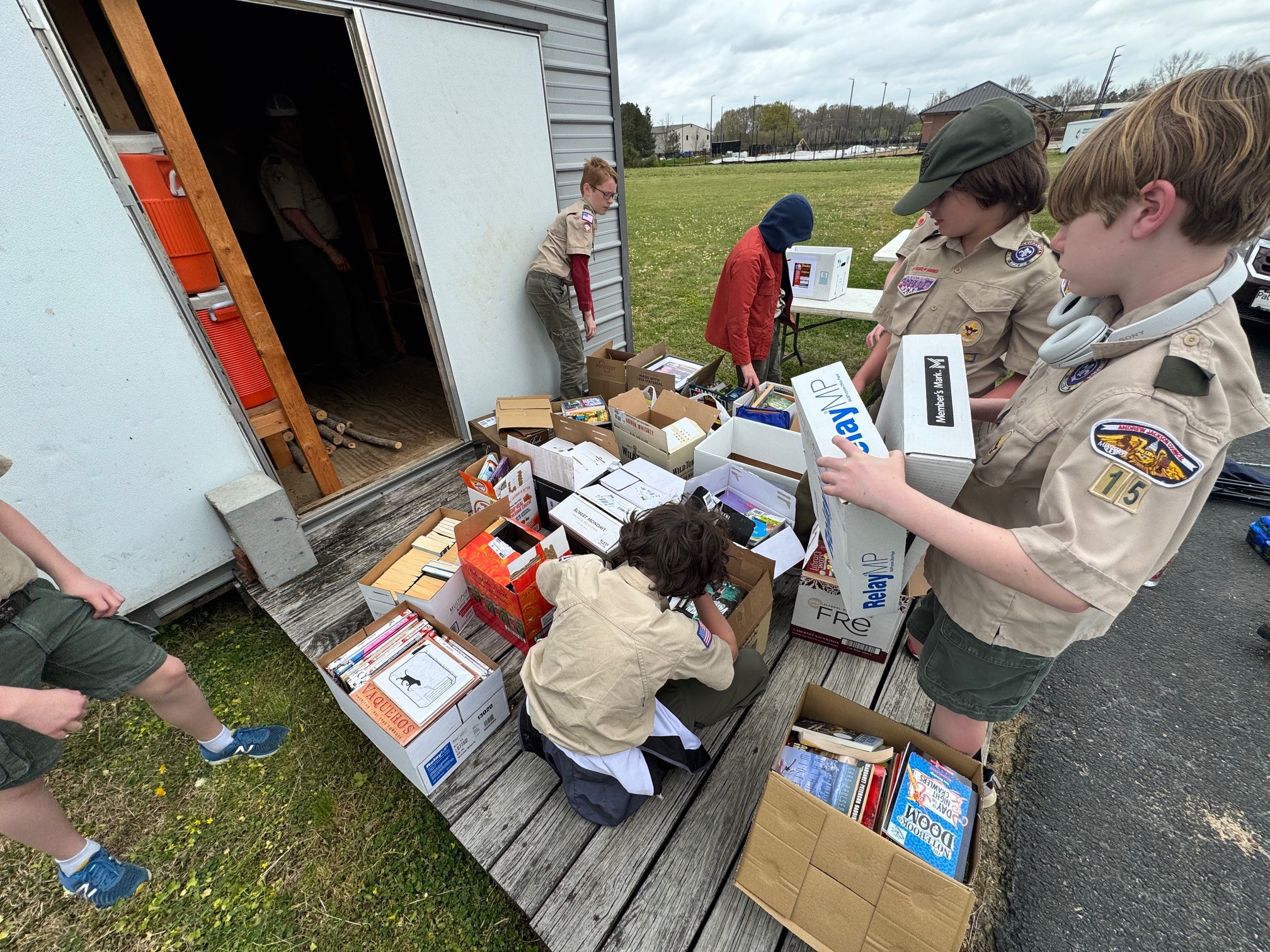
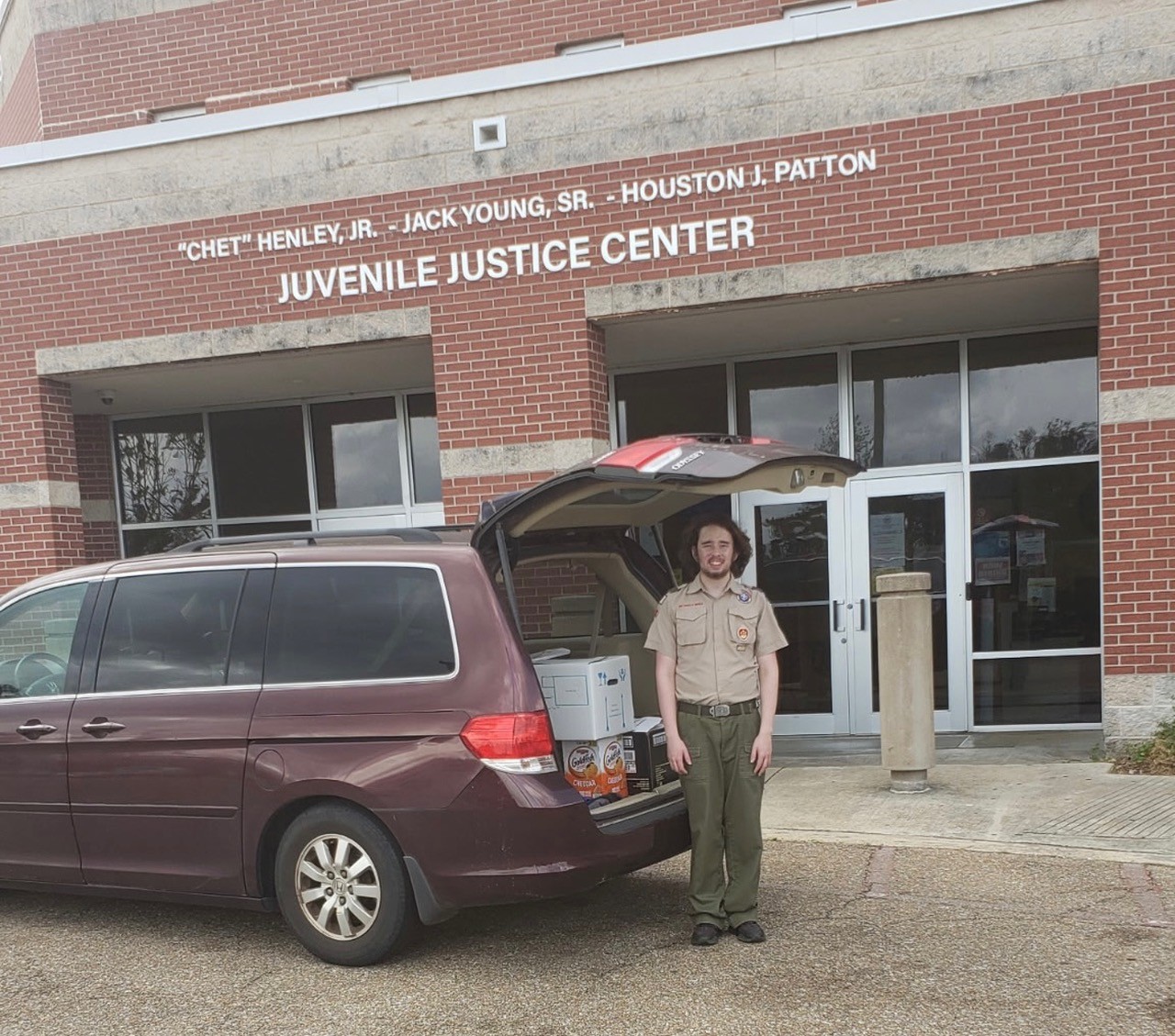
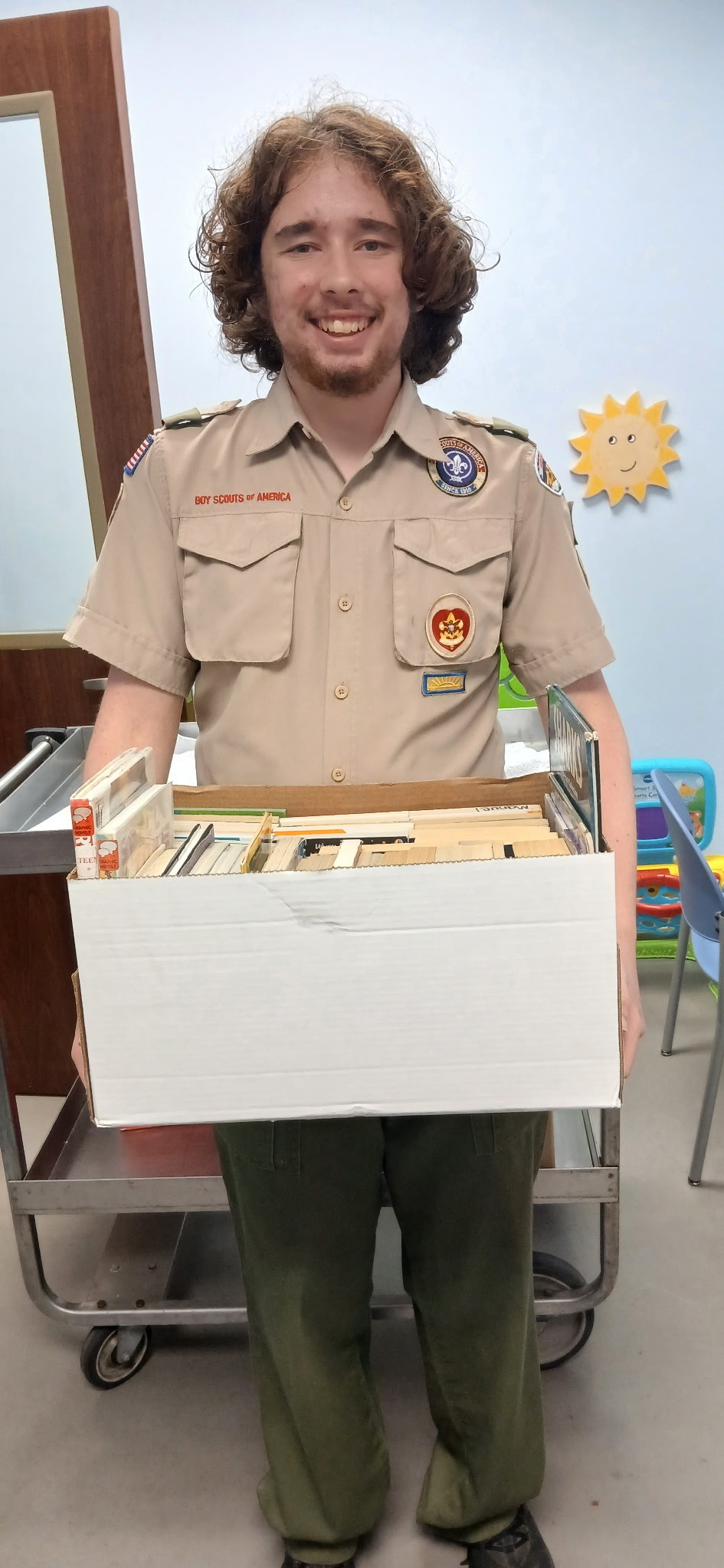
James is seeking donations of new and gently used children’s books. These books will be sorted by age-appropriateness and genre and given to Children within Child Protection Services.
Books will be provided to Youth Courts in the tri-county area for their playrooms/libraries, to Foster Parents, to CPS Social Workers and to the Children!
Watch the attached Video for more information.
Books may be dropped off at the Canton, Madison, and/or Ridgeland libraries, local area business will soon have drop boxes, as will local schools and churches.
You may also drop children’s books at Thompson Law Firm, located at 2060 Main Street, Madison, MS 39110.
You may email any questions or concerns to JamesParmley7@gmail.com or contact any Scout or Leader with Troop 15 Madison, or contact Matthew Thompson at Matthew@ThompsonLaw.ms or text him at (601) 906-6545.
A still-alive MS Bill seeks to tweak the Youth Court timeline when a child has been adjudicated neglected and abused for a permanency hearing.
The current law requires that the youth court shall conduct a permanency hearing within one hundred twenty (120) days or every sixty (60) days for children under three (3) years of age after the earlier of:
(i) An adjudication that the child has been abused or neglected; or
(ii) The date of the child’s removal from the allegedly abusive or neglectful custodian/parent.
The proposed changes requires;
the youth court shall conduct a permanency hearing within * * * three (3) months * * * after the earlier of the following and every three (3) months thereafter:
(i) An adjudication that the child has been abused or neglected; or (ii) The date of the child’s removal from the allegedly abusive or neglectful custodian/parent.
This change is not that significant and likely will not effect you.
Matthew Thompson is a child welfare attorney and noticed this when review pending legislation and needed a filler blog for the week of Spring Break.
(p) Support from the family protection worker or the family protection specialist in efforts to do a better day-to-day job in caring for the child and in working to achieve the agency’s objectives for the child and the birth family through provision of:
Read this as help, info and cooperation from the social worker/investigator.
(i) A copy of the “Foster Child Information Form” and all other pertinent information about the child and the birth family, including medical, dental, behavioral health history, psychological information, educational status, cultural and family background, and other issues relevant to the child which are known to the department at the time the child is placed in foster care prior to the child’s placement with a foster parent or parents. The department shall make reasonable efforts to gather and provide all additional current medical, dental, behavioral, educational and psychological information reasonably available from the child’s service providers within fifteen (15) days of placement. When the department learns of such information after fifteen (15) days of placement, the department shall communicate such information to the foster parent as soon as practicable;
This is the Right to be informed about your foster child; the good, the bad and the important.
(ii) An explanation of the plan for placement of the child in the foster parent’s home and the ongoing and timely communication of any necessary information which is relevant to the care of the child, including any changes in the case plan;
This includes the right to know what the permanent plan and concurrent plan for custody/placement are. You have the right to timely updates about any changes in this plan. Interestingly, one placement ends the foster parent does not have the right to know where the child is.
(iii) Help in using appropriate resources to meet the child’s needs, including counseling or other services for victims of commercial sexual exploitation or human trafficking;
Counseling services will be made available if deemed necessary. While you will be privy to confidential information regarding this, you must maintain that confidentiality.
(iv) Direct interviews between the family protection worker or specialist and the child, previously discussed and understood by the foster parents;
You can learn about the info exchanged in in-person interviews between the child and the agency.
(v) Information regarding whether the child experienced commercial sexual exploitation or human trafficking;
You will be provided information if applicable, but also asked to hold this in strict confidence.
(vi) Information related to the Healthy, Hunger-Free Kids Act of 2010. Foster parents shall protect the confidentiality of the child by working directly with a designated school official to complete the application for free lunches.
The Healthy, Hunger-Free Kids Act of 2010 authorized funding for federal school meal and child nutrition programs and increased access to healthy food for low-income children. The bill that reauthorized these programs is often referred to by shorthand as the child nutrition reauthorization bill.
Matthew Thompson and Chad King are child welfare attorneys in the State of Mississippi. They have represented natural parents, foster parents, grandparents, other relatives, fictive kin, children and the Agency (CPS) throughout their decades of practice. (NOT all at the same time).
(l) Involvement in all the agency’s crucial decisions regarding the child as team members who have pertinent information based on their day-to-day knowledge of the child in care and involvement in planning, including, but not limited to, individual service planning meetings, foster care review, individual educational planning meetings, and medical appointments;
The foster parent has the right to “be involved” in decisions as a “team member” that has pertinent information. This involvement includes that you may share your opinion…however, it does not go so far as to veto any decision made by the Court or CPS. The above is a paragraph loaded with buzz words, but provides little meat regarding actual decision making.
(m) The opportunity to participate in the planning of visitations between the child and the child’s siblings, parents or former guardians or other biological family members which have been previously authorized by the youth court. Visitations shall be scheduled at a time and place meeting the needs of the child, the biological family, and the foster family.
The foster parent has the right to “participate in planning” visitations. This is not the right to deny or refuse visitations. This is not the right to alter, amend or change the Court-ordered visitation. This is the right to let CPS or the Court know that Wednesday nights, 6:00 pm-9:00 pm isn’t a convenient time for a visit as you are obligated to cook chicken tenders at church. Otherwise, as a foster parent, you are obligated to cooperate with visitation, even if you disagree with the idea and even if the child does not want to go. The child does not “drive the boat.”
Recognizing that visitation with family members is an important right of children in foster care, foster parents shall be flexible and cooperative with regard to family visits but shall retain the right to reasonable advance notice of all scheduled visitations;
Last minute changes or unplanned visits may not work, however, as a foster parent you have agreed to try and make it happen. Please do. The fastest way to no longer be a foster parent is interfere with visits, aka the permanent plan of reunification.
(n) The ability to communicate with department personnel or representatives twenty-four (24) hours a day, seven (7) days a week, for the purpose of aiding the foster parent;
Again, this is really the ability to provide info or request a call back. You may not get a call back at midnight. Also, if you are providing information for the worker to know/consider, you may not get a text confirmation…
(o) A comprehensive list of all resources available to the foster parent and child, including dental providers, medical providers, respite workers in the area, day cares, and methods for submitting reimbursements;
This means you may be provided a list of providers if its determined that those services are necessary. IF they are not deemed necessary you may not get a list. If these services are deemed necessary it is the foster parent’s responsibility to see that arrangements are made for the child to use these services, with assistance of the agency.
Matthew Thompson and Chad King are child welfare attorneys in the State of Mississippi. They have represented natural parents, foster parents, grandparents, other relatives, fictive kin, children and the Agency (CPS) throughout their decades of practice. (NOT all at the same time).
It’s not just putting on band aids and darning socks…
Ongoing Training Requirements. All licensed Foster Parents are required to receive ten (10) hours of ongoing annual training, five (5) of which must be in a classroom setting.
The Licensure Specialist shall ensure that the Foster Parents on their caseload are notified of the availability of home-based and online training opportunities, as well as dates, times, and locations of classroom-based classes.
Approved Ongoing Training. Foster parents are permitted to receive training, with approval of the Licensure Specialist, through participation in the following: training sessions, seminars, workshops, or conferences specifically dealing with children or parenting issues that have been approved by the National Association of Social Workers, Mississippi Chapter or the Child Welfare Training Institute (CWTI);
Training provided by a MDCPS Licensure or Adoption Specialist; and
Individual training sessions conducted as part of a home visit. The Licensure Specialist has the authority to approve other training events. Foster parents who wish to participate in any other training event must get permission from the Licensure Specialist/ASWS prior to registering for and attending the training event.
Each ongoing training should impart new skills or knowledge necessary to care for the children in the foster parent’s home. The foster parent cannot seek training on the same subject unless new and updated material is being presented.
Proof of Training. Foster Parents are required to provide a certificate and agenda or other proof of completion to the Licensure Specialist within three (3) months of the training. The Licensure Specialist must place documentation of completion of ongoing training hours in the paper file and in MACWIS.
Carryover Hours. Foster Parents who exceed the required number of ongoing training hours may roll over up to three (3) training hours to the next year. The Licensure Specialist must document the total number of hours completed and indicate in the paper file and in MACWIS that the family is eligible to roll hours over to the next year.
Authority: Mississippi Department of Child Protection Services
Matthew Thompson and Chad King are child welfare attorneys in the State of Mississippi. They have represented natural parents, foster parents, grandparents, other relatives, fictive kin, children and the Agency (CPS) throughout their decades of practice. (NOT all at the same time).
(f) The opportunity to communicate and collaborate, without threat of reprisal, with a department representative when further educational services are needed to ensure the child’s educational needs are met, including services such as an Individualized Educational Plan (IEP), tutoring, occupational therapy, speech therapy and after-school programs;
A foster parent has the right and the obligation to be involved in the education of the foster child. This is the nuts and bolts of educating a young person. From getting them to and from school, events and meetings to addressing tardies, absences, tests, quizzes and programs.
(g) The opportunity to attend all IEP meetings, along with the department worker, at the child’s school as long as the child is in custody and receiving special educational services;
The foster parent should be attending and has the right to attend Individualized Educational Plan (IEP) meetings and helping be a part of the progress and solution. This also means cooperating with the educational goals set by the Agency, school and teachers and NOT supplanting your own independent judgment for that of the School. Issues should be shared with the teacher and agency (social worker) and moved up the food chain if not addressed appropriately.
(h) The opportunity to communicate with the foster child’s guardian ad litem;
The GAL is the investigative arm of the Court and quasi-attorney for the child. They are tasked with interviewing the child, the parents, relatives, and others regarding the reason CPS is involved in the first place. It is NOT unusual for the GAL to not interview foster parents. All of the facts and circumstances giving rise to CPS involvement are not due to anything the foster parent did or did not do. Also, as the plan is almost always reunification in the first instance, the GAL is not too worried with how the licensed, state-approved foster home is doing…however, as a Foster Parent you have the opportunity to communicate and should if its involving the best interests of the child.
(i) The opportunity to attend all youth court hearings involving a foster child occurring while that child is placed in their care without being a party to the youth court action, unless the youth court determines that any foster parent should not be present. Foster parents may attend all youth court hearings and have legal counsel attend and observe with them if the child’s permanent plan is adoption by the foster parents, unless the youth court determines that any foster parent should not be present. Foster parents may communicate with the guardian ad litem in writing at any time. Foster parents may ask to be heard concerning the best interest of the child at any disposition or permanency hearing;
This one is tricky. It states you have the right to attend hearings and then creates caveats. First, the Court (the Judge) has to determine you may or may not attend. This is discretionary. Some judges allow the foster parent to attend and some do not. If are allowed to attend you may have counsel attend with you and OBSERVE. Did you get that? Observe. The FPBOR does not say you may participate and a foster parent is NOT a party.
This mean its possible for you to attend, but you may well not get to ask any questions or really be involved in the hearing. Alternatively, the judge may allow for participation if deemed necessary and in the child’s best interests.
If the permanent plan is adoption the Court is more inclined to allow attendance. Also, if its a disposition hearing or permanency hearing/review a foster parent may ask to be heard. This means you have the opportunity to address the Court. It also means you may be subject to questioning by the Judge, Prosecutor, GAL, parent(s)(or their attorney) and CPS-agency attorneys.
(j) When the dates of the permanency hearing and permanency review hearing have been set by the youth court, and if necessary to fulfill the notice requirements, the judge or the judge’s designee shall order the clerk of the youth court to issue a summons to the foster parents to appear personally at the hearings as provided by Section 43-21-501;
A summons is a Court-issued document for your required attendance to a hearing for a time and date certain. If summoned there could be consequences if you do not attend.
(k) The opportunity to request from the youth court permission to communicate with the child’s birth family, previous foster parents of the child, and prospective and finalized adoptive parents of the child, without the threat of reprisal. However, this right creates no obligation of the birth family, previous foster parents, or prospective and finalized adoptive parents to communicate in return;
This allows a foster parent the chance to get information, updates and the like or possibly even provide information. However, no response is required to any inquiry and there is no obligation on any of the above-named positions to do anything at all in response to the communications. This can be quite frustrating as you are merely trying to get an update or provide some helpful information for consideration.
Matthew Thompson and Chad King are child welfare attorneys in the State of Mississippi. They have represented natural parents, foster parents, grandparents, other relatives, fictive kin, children and the Agency (CPS) throughout their decades of practice. (NOT all at the same time).








 (601) 850-8000 - - BowTieLawyer.MS