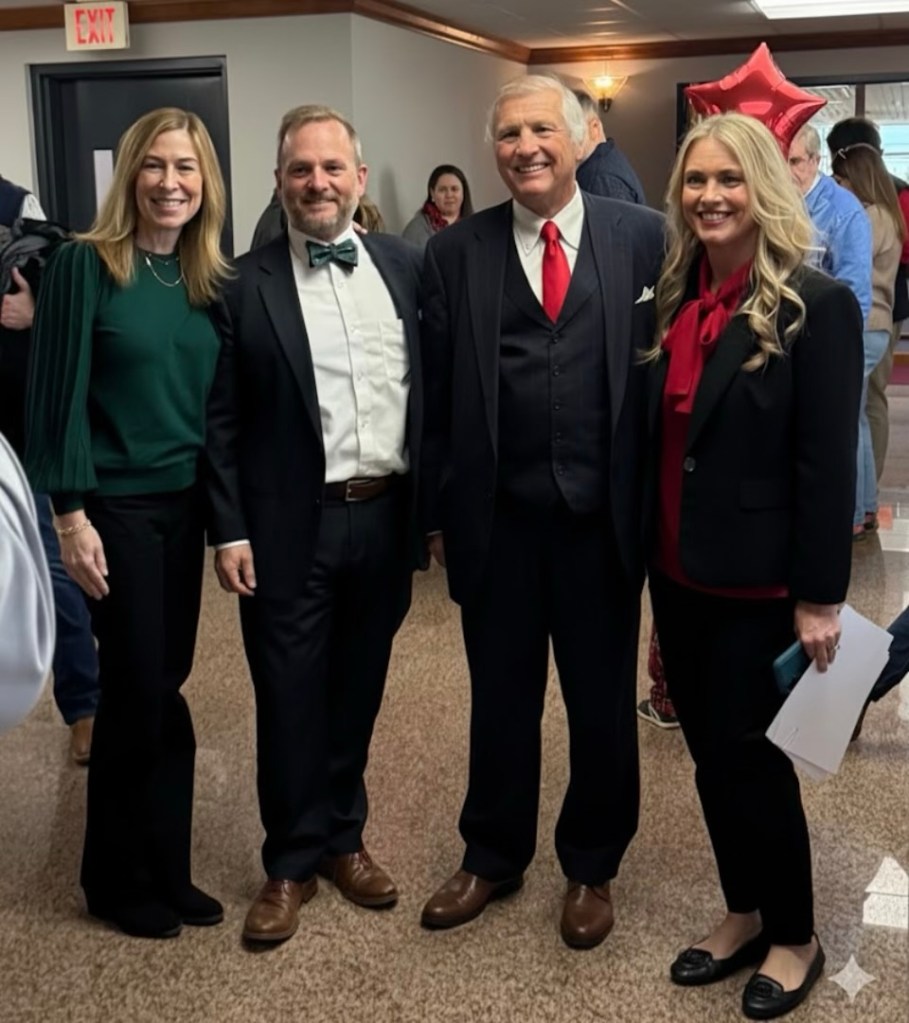
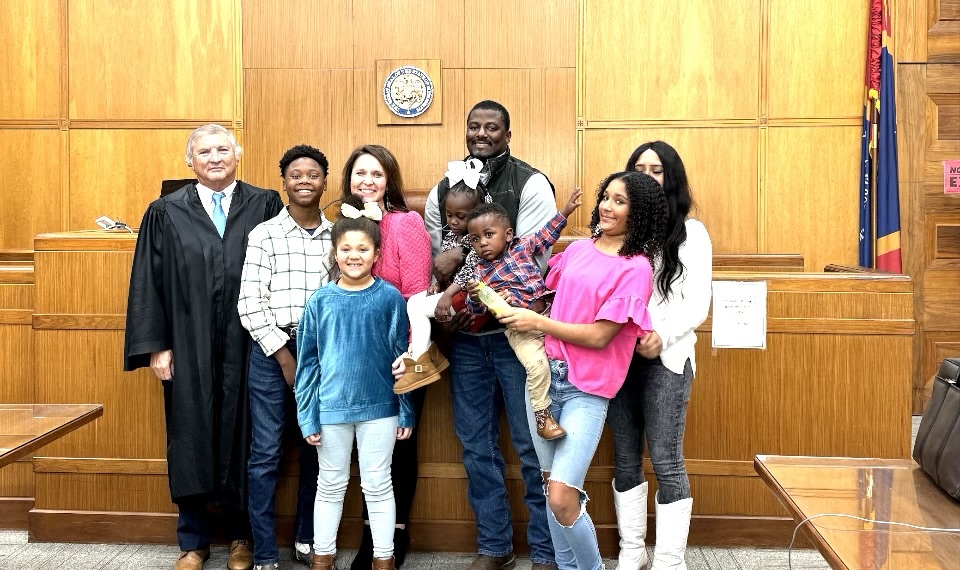
Chancery Judges are some of the most powerful judges in the state.
A Mississippi Chancellor (Chancery Court judge) holds broad judicial power over cases of equity; including domestic relations (divorce, custody, child support), wills, estates, land disputes, and cases involving minors or persons of unsound mind.
They have authority to grant injunctions, punish for contempt (fines, sanctions and/or jail), and exercise these powers daily.
An ideal judge combines high intellectual capacity with exceptional temperament, impartiality, and integrity.
Key qualities include patience, legal expertise, active listening, courage, and the ability to act firmly yet with compassion, ensuring fair proceedings and timely, reasoned decisions that uphold public trust.
Fairness in justly applying the law to the facts is an oath Judge swear to do.
Showing respect to the litigants, the attorneys, and the witnesses is a must.
Being honest, patient and acting with integrity are prerequisites for any Judge.
In Mississippi, in most cases judges are elected. Most Mississippians never encounter a judge and don’t give much thought into who is judge.
I assure you who your judge is is critically important and impacts your rights to your child and your fights to your freedom.
There are judicial elections throughout the state this November.
Get involved. Educate yourself. Ask attorneys and persons that know the judge or have experience with them.
Want an honest assessment? (that’s only mildly biased) Ask me.
Matthew Thompson is a family law attorney in Mississippi and practices statewide and right now who your judge is can matter more than the facts or the law…and that’s potentially dangerous.
Recusal means the Judge can longer hear the case or the issue and in some instances it is mandatory. Here, it was mandatory.
This refusal, by Judge Tametrice Hodges Lindsey, violated well-founded Mississippi law.
When asked by trial counsel to recuse herself, Judge Tametrice Hodges Lindsey claimed to not have seen the motion, despite it being filed in writing and filed with the Mississippi Electronic Court filing system.
Hinds County Chancery and Mississippi can do better.
It should not take an appeal all the way to the Mississippi Supreme Court to get a Judge to follow the law they swore to uphold!
CONCLUSION “¶53. The visitation and custody issues were only resolved in Angela’s favor before this Court received both appeals… The trial court erred by finding (the attorney) in contempt without recusing from the constructive criminal contempt proceeding and giving him proper notice...” Majority Opinion, Mississippi Supreme Court. 4/02/2026 https://courts.ms.gov/appellatecourts/docket/sendPDF.php?f=730_755583.pdf&c=98771&a=N&s=2
Matthew Thompson is chancery attorney in Mississippi and supports a change in Hinds County Chancery Court. VOTE NOVEMBER 3!!
It’s time for a change in Hinds County Chancery Court.
Reported PUBLIC Opinion: Believe it or not, some Judges ignore the law, violate litigant’s rights and threaten lawyers who stand up for what is right…it’s sad, but it happens.
This past week some level of justice was meted out by the Mississippi Supreme Court. Not 100% justice, but when you operate in a world of judges with near absolute power and the checks and balances are truly stacked against any change or accountability we celebrate even the small victories!
In a recent Mississippi Supreme Court Opinion, (3) three justices found as follows;
“¶56. Here, the chancellor (Tametrice Hodges-Linzey) denied Angela basic constitutional due process protection. James, (her ex-husband) however, was given sufficient time and an opportunity to present his case for Angela’s contempt. Yet, after James’s counsel rested James’s case-in-chief, Angela was allowed to call only one witness, the minor child. Angela was to be the next witness. Instead, however, the chancellor abruptly announced that the matter was being recessed due to the late hour. The chancellor then ruled that Angela “never once put forth a defense or overcame the contempt brought – the petition for contempt brought against you.” Justice Griffis, MS Supreme Court (Dissent)
The Judge, Tametrice Hodges Linzey, denied a litigant the right to call additional witnesses and testify on her own behalf!
Subsequently Angela’s counsel tried to correct this error and asked to make a motion. The chancellor responded: “You may not. We’re done. Save it for MEC. We are done and please, I will hate to have to send you [to jail] with your client. Feel free to file it on MEC.” Justice Griffis, MS Supreme Court (Id.)
When challenged, legally, properly and with respect due the position of the Court, the Judge threatened her attorney with JAIL!!
“¶57. .. Angela should have been given an ample opportunity to call witnesses and admit evidence in her defense.” Justice Griffis, MS Supreme Court (Id.)
“¶58. Angela was clearly not allowed an opportunity to present her defense. This is a basic and fundamental error that this Court cannot allow to stand. Professor Bell made it clear that Mississippi law requires that Angela be given an opportunity to respond to James’s contempt allegations.
¶59. Accordingly, I opine that the chancellor committed manifest error in her order to incarcerate Angela for thirty-two days, lose temporary custody of her son, and sanction her attorney. I therefore dissent from the majority’s decision not to review this matter. Instead, I would reverse this case and remand for further proceedings.
¶60. Also, I am concerned by the chancellor’s action. First, the chancellor caused Angela to be incarcerated longer than allowed by statute. Second, she had no opportunity to appeal her order of incarceration before she was incarcerated. Third, the chancellor failed to provide Angela with basic due process—i.e., an opportunity to be heard—especially before she was incarcerated.
¶61. Chancellors have a duty, responsibility, and obligation to ensure litigants receive their rights to be heard, present evidence in their own defense, and the right to appeal. Angela was denied these rights…
¶62. I concur as to the majority’s decision to vacate the chancellor’s order that sanctioned Angela’s counsel and to decline to order permanent recusal or to refer this matter to the Mississippi Commission on Judicial Performance.” COLEMAN, P.J., AND ISHEE, J., JOIN THIS OPINION IN PART.
Justice Griffis, MS Supreme Court (Dissent)
The Majority of the Court likewise concluded;
CONCLUSION “¶53. The visitation and custody issues were…resolved in Angela’s favor before this Court received both appeals… The trial court erred by finding (the attorney) in contempt without recusing from the constructive criminal contempt proceeding and giving him proper notice. … As a result, this Court vacates the contempt judgment against (the attorney), remands the case for contempt proceedings before a different chancellor, and affirms the trial court’s judgment on all other issues. The chancery clerk also is ordered to return $1,500.00 to (the attorney).” Mississippi Supreme Court, (Majority Opinion) 4/02/2026 NO. 2024-CA-00690-SCT
Matthew Thompson is a civil litigation attorney and will fight for his client’s rights even in the face of improper threats…though prefers to not to and prefers Judges that treat litigants, witnesses and attorneys with respect…
It’s time for a change in Hinds County Chancery Court.
Matthew Thompson is a child custody attorney in Mississippi and does think Joint Custody could be in the best interest of the child in certain circumstances…
MS House Bill 1577 seeks to Stop knowingly false abuse allegations/reports.
2) (a) A report shall not be considered filed in good faith under this section when it is unsupported by credible evidence; and the person who filed the report intentionally submitted the report knowing it was false. Such report shall be considered a willful false report of child abuse.
(b) (i) Any person convicted of making a willful false report of child abuse under Section 97-35-47, shall be punished by a fine not to exceed Five Thousand Dollars ($5,000.00), by imprisonment in jail not to exceed one (1) year, or both.
(c) In addition to any fine and imprisonment, and upon a proper showing made to the court, the person may be ordered to pay restitution to the law enforcement agency and/or the Department of Child Protection Services for any reasonable costs directly related to the investigation of the false report.
(d) Violations of this section may be prosecuted by the state Attorney General, the Department of Child Protection Services, the county attorney of the county in which the child resides or the district attorney of the county in which the child resides.
SECTION 2. Section 97-35-47, Mississippi Code of 1972, is amended as follows:
97-35-47. It shall be unlawful for any person to report a crime or any element of a crime, including an allegation of child abuse or neglect, to any law enforcement agency or officer, the Department of Child Protection Services, or any officer of any court, by any means, knowing that the report is false. A violation of this section shall be punishable by imprisonment in the county jail not to exceed one (1) year or by fine not to exceed Five Thousand Dollars ($5,000.00), or both.
In addition to any fine and imprisonment, and upon proper showing made to the court, the defendant shall be ordered to pay as restitution to the law enforcement agency and/or the Department of Child Protection Services reimbursement for any reasonable costs directly related to the investigation of the falsely reported crime and the prosecution of any person convicted under this section.
A report is false under this section when it is unsupported by * * * credible evidence and the person intentionally submitted the report knowing it was false. Proof that the person who filed the report reasonably relied on credible evidence or credible information shall be a defense to a claim of willful false reporting under this section.
False reports unfortunately happen. False reports unfortunately are weaponized. Now, there are consequences that fit the crime.
Matthew Thompson is a child welfare attorney in Mississippi and has seen false reports of abuse end up in Court.
Hinds County Attorney, Bridgett Clayton, has qualified to run for Hinds County Chancery Judge!
“After much prayer and consideration, I am honored and excited to announce that I qualified for Hinds County Chancery Court Judge, District 5-3, on today.”
“I am ready to serve the citizens of Hinds County with God serving as a Lamp unto my feet and the Light unto my path as I seek election for this judicial seat to do justly, love mercy, and walk humbly before my God. Micah 6:8”
I am requesting your prayers and support during the campaign as well as on Election Day which is November 3.
Please be on the lookout for future campaign information. Thank You!
Matthew Thompson is a Chancery practitioner and knows-well the power, authority and responsibility that Chancellor’s have and the knowledge and wisdom they should possess. Attorney Bridgett Clayton has all of those qualities and then-some!
Please support Bridgett Clayton for Hinds County Chancellor!
The Noncustodial Parents’ Bill of Rights and Responsibilities which shall be provided to all noncustodial parents.
The Department of Human Services shall extend the following rights to noncustodial parents:
(a) Advance notification of all hearings concerning proposed modifications of child support;
(b) Advance notification concerning the representation of the noncustodial parent in court proceedings, which does not require an attorney;
(c) That the noncustodial parent shall have the same rights as the custodial parent concerning the receipt of any notification;
(d) Advance notice of information regarding scheduled meetings concerning the child;
(e) Advance notice of all meetings concerning all the agency’s crucial decisions regarding the child; and
(f) The ability to communicate with department personnel or representatives twenty-four (24) hours a day, seven (7) days a week, for the purpose of aiding the noncustodial parent.
This is not a sea-change, nor profound. The non-custodial parent is already entitle to notice, the right to counsel, the right to information, notice of meetings and decisions. The last item, the ability to communicate 24/7 seems unreasonable, but maybe that just means you can leave a message or send an email. Who knows?
Non-custodial parents already have rights! **Of note, there has yet to pass a Parent’s Bill of Rights in Mississippi law** However, even without that, parent’s have a fundamental right, guaranteed by the US Constitution to raise their child as they see fit.
Matthew Thompson is custody attorney in Mississippi and has represented hundreds of moms and dads in family courts throughout the state.
It’s that time of year again. Proposed law/legislation is being kicked around by the State Legislature.
House Bill No. 11, proposed by Representative Arnold, seeks “TO PROHIBIT THE APPLICATION OF SHARIA LAW IN DIVORCE AND CHILD CUSTODY CASES; TO AMEND SECTION 11-63-1, MISSISSIPPI CODE OF 1972, TO CLARIFY THE PROHIBITION AGAINST USE OF SHARIA LAW IN COURT ORDERS.”
To date, this scribe is unaware of any Court’s using, applying or considering Sharia law in the State of Mississippi, as same would be contrary to the MS Constitution anyway.
Of interest, the Bill includes that a Mississippi Court “shall not enforce a foreign law that violates the Mississippi Constitution, any laws of this state, the United States Constitution, any laws or ratified treaties of the United States and the territories of the United States * * *.”
The Bill likewise bars enforcement of ” (b) Any order by a court, arbitrator, administrative agency or other adjudicative, mediation or enforcement authority that seeks to enforce foreign law in violation of paragraph (a) of this subsection (2) shall be void.”
So far, it’s basically saying MS Court’s will not honor foreign laws or Orders that violate MS law or Constitutional law or are based on factors contrary to MS law/US Constitutional considerations. Makes sense.
However, the Bill includes one other tidbit that could prove to have unintended consequences, “In Sections 11-7-301 through 11-7-309 “foreign judgment” means any judgment, decree or order of a court of the United States * * *. The term “foreign judgment” shall not mean or include any judgment, decree or order from any jurisdiction outside of the United States or its territories, or any judgment from another state or territory of the United States that applies law from a jurisdiction outside of the United States or its territories.
This last paragraph seems to invalidate any “foreign judgment” that was not secured within the U.S.
Why do you care? Is that foreign Adoption, which is a Judgment, valid?
That “foreign” quickie Divorce in Haiti or the Dominican Republic? Are they valid?
Up and until this Bill, Mississippi and the United States have routinely recognized foreign judgments IF they were obtained in a procedural and substantive manner consistent with that foreign entities jurisdiction and law. This is called Comity and it’s a necessary legal concept.
Does HB. No. 11 unintentionally seek to overturn Comity? I argue that it certainly may and that’s no laughing matter!
Matthew Thompson is a Family law attorney and has handled multiple matters that involve foreign decrees and clients from all over the world.