Category Archives: Crime

Man Robs Bank Hoping to Get Sent to Prison to Escape Wife, Sentenced to House Arrest.

Kansas City, Kansas. John Ripple walked into a bank and handed the teller a note demanding cash and stating he had a gun. The teller handed over $2,924.00. Ripple then sat in the lobby for police to arrive.

Ripple surrendered. Upon his arrest, he told investigators that he wrote the note in front of his wife, telling her he’d rather be in in jail than live with her.

Prior to sentencing, Ripple sought leniency as he was facing up to 37 months in prison. Ripple cited his recent heart surgery and depression, causing him to not “be himself.” Interestingly, the bank vice president and teller also supported a lesser sentence.

In a twist of fate, the Court sentenced Ripple to 6-months of home confinement. Sentencing him to the fate he was seeking to escape. There has been no update as to whether he was seeking post-conviction relief for cruel and unusual punishment, being forced to live with your spouse.

Matthew Thompson is a divorce attorney in Mississippi and reminds you there are easier ways than robbing a bank to get divorced.

http://www.BowTieLawyer.ms (601)850-8000

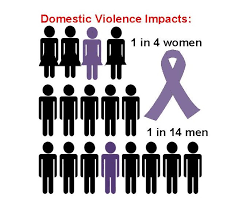
16 questions used to ID domestic abuse victims likely to be killed

Research has found that men who choked their partners were 10 times more likely to eventually kill them.

download.png

A CBS News article reported that the Oklahoma City Police Department is among the forces using the 16-question checklist, which is designed to help officers identify victims who are likely to be killed.

By answering the below questions, the more times a victim answers “Yes” to the questions, the more likely domestic violence may lead to a victim’s death. The checklist will be used across the state of Oklahoma. Authorities in Maryland say fatalities have dropped 30 percent since they started using it.


Below are the 16 questions contained in the “Domestic Violence Risk Assessment” checklist:

1. Has he/she ever used a weapon against you/threatened you with a weapon?

2. Has he/she ever threatened to kill you or your children?

3. Do you think he/she might try to kill you?

4. Does he/she have a gun or can he/she get one easily?

5. Has he/she ever tried to choke you?

6. Is he/she violent or constantly jealous or does he/she control most of your daily activities?

7. Does he/she follow or spy on you or leave threatening messages?

8. Have you left him/her or separated after living together or being married?

9. Is he/she unemployed?

10. Has he/she ever tried to kill himself/herself?

11. Do you have a child/children together?

12. Do you have a child that he/she knows is not his/hers?

13. Has he/she been physical toward the child(ren) in a way that concerns you?

14. Does he/she have an alcohol/substance abuse problem?

15. Has he/she interfered with a 911 call?

16. Is there anything else that worries you about your safety?


If you are in Mississippi and need help please do one or all of the following by contacting the Mississippi Coalition Against Domestic Violence;

If you are in danger, call 911.

If you need immediate assistance after hours: Call 1-800-799-SAFE(7233).

Local to the metro area may call 601-981-9196

If you wish to be connected with someone in your area regarding domestic violence, volunteering or making a donation, call 1-800-898-3234.

Matthew Thompson is a Family Law Attorney in Mississippi and encourages victims of domestic violence to have an emergency plan and seek immediate help.

Don’t take your Gun to Court.

The Mississippi Supreme Court has reversed a Lowndes County Chancery Court Judge’s Order which essentially banned firearms from all areas of the courthouse.

download.jpg
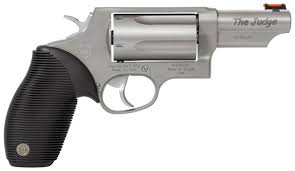
The Judge- by Taurus, a revolver capable of firing a .45 long colt or .410 shotgun shell. It is legal for Judges to carry guns, even on the bench in Mississippi.

This is somewhat controversially in light of several recent MS law clarifications on where one could and could not carry a firearm. A resident of the local community challenged the Court Order, alleging it contradicted state statutory law which limited broader restrictions to the wisdom of the legislature.

The law currently provides that if you have a concealed carry license and enhanced carry license endorsement you may carry in most public places, including Courthouses, so long as it is not in the Courtroom while Court is in session.

The Family law judges thought that did not go far enough and entered an Order, declaring the entire Courthouse a Courtroom, effectively banning firearms from the entire building.

The challenge was successful in having the Judge’s Order reversed. The Mississippi Supreme Court declared the Order an unconstitutional infringement on the rights of citizens to keep and bear arms.

“One of the clearest delegations of legislative power in our Constitution is found in
Article 3, Section 12. It provides: “The right of every citizen to keep and bear arms in
defense of his home, person, or property, or in aid of the civil power when thereto legally summoned, shall not be called in question, but the Legislature may regulate or forbid carrying concealed weapons.” (Emphasis in original.) Without equivocation, the Legislature is the branch of government that the citizens of Mississippi chose to regulate or forbid concealed weapons.”

Justice Mike Randolph, Mississippi Supreme Court

The Lowndes County Chancellors have filed for a Rehearing and made several compelling arguments on why the Mississippi Supreme Court may have gotten this one wrong. Stay tuned for more.

Also, you may be wondering why the title says Don’t take your Gun to the Courthouse, even though the Supreme Court says you can, well, it’s just good advice.

Matthew Thompson is a Family Law attorney, gun enthusiast and practices in Lowndes Chancery Court and does not think family law litigants having guns at all times is a great idea.

img_6390

How to Pick a Candidate…

It’s election season. Candidates are coming out of the woodwork for senate, congress, and judicial seats. Here’s a primer on picking a candidate.

download.jpg

  • Do they have Experience?
    • This does not mean that they must have served in the position being sought, but does their work experience, life experience, education and training lend itself to the seat?
  • Are they Competent?
    • Experience is good, but it needs to be good experience. We all know that person that received opportunities because of connections, or who their uncle knew. Merely having experience may not be enough if you are merely a figurehead or placeholder.
    • The candidate should know what the position requires and should possess the needed traits to fill the spot.
  • Do they meet the Requirements?
    • For may positions there is age, residency and education requirements. It is fair to inquire if the bare minimums are met.
  • Why are they Running?
    • Is it for prestige or ego? Is it because they can make a difference.
    • Ask the candidate, ” Why are you Running?”
  • Are they a Good Person?
    • You can have plenty of experience, meet the requirements, be competent and still not be the best candidate. There is an intangible, hard to measure judgment of candidates. This is about their honesty, integrity and is the person they portray really the person that they are?

These are just some of the criteria that should be considered when choosing a candidate. We all have an obligation to meet the candidates, engage the process, ask questions and care. These elections impact our lives whether we realize it or not.

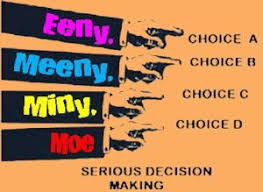
Matthew Thompson is a family law attorney and is excited about the campaign season and if all else fails you can still “eeny, meeny, miney, moe” to pick your slate.

img_6390

Mississippi Uniform Child Abduction Prevention Act (UCAPA); How to prevent Parental Abduction in Custody cases.

In 2010, Mississippi enacted the Uniform Child Abduction Prevention Act (UCAPA). This statute is designed to give the Courts the authority to prevent child abduction in parental custody/visitation disputes. This statute, in conjunction with the UCCJEA regarding interstate jurisdictional determinations, provides remedies to  prevent abduction by providing for injunctive relief upon a demonstration of a credible “risk of abduction.” 

The statutes provides the following;

§ 93-29-13. Factors to determine risk of abduction.

(a)  In determining whether there is a credible risk of abduction of a child, the court shall consider any evidence that the petitioner or respondent:

(1) Has previously abducted or attempted to abduct the child;

(2) Has threatened to abduct the child;

(3) Has recently engaged in activities that may indicate a planned abduction, including:

(A) Abandoning employment;

(B) Selling a primary residence;

(C) Terminating a lease;

(D) Closing bank or other financial management accounts, liquidating assets, hiding or destroying financial documents or conducting any unusual financial activities;

(E) Applying for a passport or visa or obtaining travel documents for the respondent, a family member or the child; or

(F) Seeking to obtain the child’s birth certificate or school or medial records;

(4) Has engaged in domestic violence, stalking or child abuse or neglect;

(5) Has refused to follow a child-custody determination;

(6) Lacks strong familial, financial, emotional or cultural ties to the state or the United States;

(7) Has strong familial, financial emotional or cultural ties to another state or country;

(8) Is likely to take the child to a country that:

(A) Is not a party to the Hague Convention on the Civil Aspects of International Child Abduction and does not provide for the extradition of an abducting parent or for the return of an abducted child;

(B) Is party to the Hague Convention on the Civil Aspects of International Child Abduction but:

(i) The Hague Convention on the Civil Aspects of International Child Abduction is not in force between the United States and that country;

(ii) Is noncompliant according to the most recent compliance report issued by the United States Department of State; or

(iii) Lacks legal mechanisms for immediately and effectively enforcing a return order under the Hague Convention on the Civil Aspects of International Child Abduction;

(C) Poses a risk that the child’s physical or emotional health or safety would be endangered in the country because of specific circumstances relating to the child or because of human rights violations committed against children;

(D) Has laws or practices that would:

(i) Enable the respondent, without due cause, to prevent the petitioner from contacting the child;

(ii) Restrict the petitioner from freely traveling to or exiting from the country because of the petitioner’s gender, nationality, marital status or religion; or

(iii) Restrict the child’s ability legally to leave the country after the child reaches the age of majority because of a child’s gender, nationality or religion;

(E) Is included by the United States Department of State on a current list of state sponsors of terrorism;

(F) Does not have an official United States diplomatic presence in the country; or

(G) Is engaged in active military action or war, including a civil war, to which the child may be exposed;

(9) Is undergoing a change in immigration or citizenship status that would adversely affect the respondent’s ability to remain in the United States legally;

(10) Has had an application for United States citizenship denied;

(11) Has forged or presented misleading or false evidence on government forms or supporting documents to obtain or attempt to obtain a passport, a visa, travel documents, a social security card, a driver’s license or other government-issued identification card or has made a misrepresentation to the United States government;

(12) Has used multiple names to attempt to mislead or defraud; or

(13) Has engaged in any other conduct the court considers relevant to the risk of abduction.

(b)  In the hearing on a petition under this chapter, the court shall consider any evidence that the respondent believed in good faith that the respondent’s conduct was necessary to avoid imminent harm to the child or respondent and any other evidence that may be relevant to whether the respondent may be permitted to remove or retain the child.

Miss. Code Ann. §93-29-1 et. seq.

UCAPA is a another arrow in the quiver of child custody remedies when dealing with a dangerous opposing party. It is not often invoked, but is a necessary remedy in the above specific situations.

Matthew Thompson is a Child Custody lawyer in Mississippi and advises all parents to take serious Child Custody matters.

img_6390

Youth Court in Mississippi

Youth Courts deal with matters involving allegations of abuse and neglect of children.(Youth Courts also handle cases involving offenses committed by juveniles, persons who have not reached the age of 18 may be subject to the Youth Court, although there are some exceptions. Some offenses which would be treated as crimes if committed by adults are known as “delinquent acts” when they involve juveniles.”)

21 counties have a County Court Judge serving as Youth Court Judge. In counties which do not have a County Court, the Chancery Judge may hear Youth Court matters, or the Chancery Judge may appoint a lawyer to act in a judicial capacity as Youth Court Referee. The city of Pearl also has its own municipal Youth Court.

In Madison County the County Court Judges also serve as Youth Court Judges. In Hinds and Rankin Counties, they have Youth Court Judges that serve in dedicated Youth Courts.

Child abuse can be:

  • Emotional:anything said or done that is hurtful or threatening to a child, such as name calling, belittling a child, or making threats of harm.
    • Name calling; “You’re stupid.”
    • Belittling; “I wish you were never born.”
    • Destroying child’s possessions or harming pets.
    • Threatens to harm child or people they care about; “I’m going to choke you,” or “I’ll hurt your sister.”
    • Locking a child in a closet or box.
    • Rejecting a child.
    • Isolating a child.
  • Sexual Abuse is any inappropriate touching by a friend, family member, anyone having ongoing contact and/or a stranger, such as:
    • Touching a child’s genital area.
    • Any type of penetration of a child.
    • Allowing a child to view or participate in pornography.
    • Prostitution, selling your child for money, drugs, etc.
    • Forcing a child to perform oral sex acts.
    • Masturbating in front of a child.
    • Having sex in front of a child.
    • Touching a Child’s genital area.
  • Physical:any type of contact that results in bodily harm or bruising, or physically restraining a child improperly.
    • Hitting or slapping a child with an extension cord, hands, belts, fists, broom handles, brushes, etc.
    • Putting child into hot water.
    • Cutting the child with a knife or any other sharp object.
    • Shaking or twisting arms or legs, yanking a child by the arm.
    • Putting tape over a child’s mouth.
    • Tying a child up with rope or cord.
    • Throwing a child across a room or down the stairs.
  • Neglect: not meeting the basic needs of the child, including not giving essential medicines or food, leaving a child unsupervised, providing inadequate protection from the weather.
    • Medical – not giving a child life-sustaining medicines, over medicating, not obtaining special treatment devices deemed necessary by a physician.
    • Supervision – leaving child/children unattended and leaving child/children in the care of other children too young to protect them (depending upon the maturity of the child).
    • Clothing and good hygiene – dressing children inadequately for weather, persistent skin disorders resulting from improper hygiene.
    • Nutrition – lack of sufficient quantity or quality of food, letting a child consistently complain of hunger and allowing the child to rummage for food.
    • Shelter – having structurally unsafe housing, inadequate heating, and unsanitary housing conditions.

Within a neglect or abuse case there are several phases. Upon a complaint or report, which can be anonymous, Youth Court will hold a Shelter Hearing. It is akin to an emergency hearing. The Youth Court will determine if immediate action needs to be taken. Typically, the next Youth Court determination will be an Adjudication Hearing. This is to determine if the child was neglected or abused. Lastly, youth Court will conduct a Disposition Hearing. This is to determine the final outcome.

Youth Court’s #1 goal is reunification when and where possible. Youth Court cases involving neglect and abuse are not seeking to punish and there could be separate criminal consequences for acts of neglect or abuse for the perpetrator.

The “players” in a Youth Court proceeding are the JudgeYouth Court Prosecutor, Guardian Ad Litem (attorney for the child and sometimes a non-attorney investigator), some Courts now have Parent’s Representatives (attorneys appointed for a parent), or privately hired Attorneys.

Matthew Thompson is a Child Custody attorney in Mississippi and has handled multiple Youth Court cases throughout Mississippi.

img_6390

Prison for NOT Paying Child Support? YES

You have seen the recent news about a local man being arrested and jailed for his refusal to pay Court Ordered Child Support. Now, this is only done after one is initially ordered to pay, doesn’t pay, then is formally requested to pay, given notice, given an opportunity to pay or prove their inability to pay with specificity, and then and only then, jailed as a last resort. In these circumstances, knowing the layers of review, the opportunities afforded by the Court and the fact that everyone had a lawyer (actually multiple lawyers), my sympathy is nil. This is Contempt of Court and ultimately the wrong-doer has the keys to the jail.  All you have to do is pay what you owe and you are free to go.

However, if you still don’t pay, your troubles can multiply.

TITLE 97.  CRIMES  
CHAPTER 5.  OFFENSES AFFECTING CHILDREN
Miss. Code Ann. § 97-5-3  (2016)
§ 97-5-3. Desertion or nonsupport of child under age eighteen
Any parent who shall desert or wilfully neglect or refuse to provide for the support and maintenance of his or her…children…while said…children are under the age of eighteen (18) years shall be guilty of a felony and, on conviction thereof, shall be punished for a first offense by a fine of not less than One Hundred Dollars ($ 100.00) nor more than Five Hundred Dollars ($ 500.00), or by commitment to the custody of the Department of Corrections not more than five (5) years, or both; and for a second or subsequent offense, by a fine of not less than One Thousand Dollars ($ 1,000.00) nor more than Ten Thousand Dollars ($ 10,000.00), or by commitment to the custody of the Department of Corrections not less than two (2) years nor more than five (5) years, or both, in the discretion of the court.
Prison for not paying child support? Yes. It’s the law.
Matthew Thompson is a Child Custody and Child Support Attorney in Mississippi.
img_6390

Things NOT to tell the Police…

There’s an old joke…”You have the Right to remain silent, but do you have the Ability?”

gallery-thumbnails.jpg
vectorolie/free digitalphotos.net

While my primary practice area is Family Law, there is some spillover into other areas. Through the years, I have learned there are just some things you do not say to law enforcement.

5.  I did it!

4.  I only had a couple.

3.  Trying to meet your quota?

2.  Oink, oink.

1.  I called you because he stole my marijuana pipe. 

Matthew Thompson is a Family Law attorney in Mississippi and advises you to be respectful of law enforcement a nd not say these things. 

Follow the blog: BowTieLawyer Visit the websiteThompson Law Firm  You may also contact Matthew with your family law case, question or concern at 

(601) 850-8000  or Matthew@bowtielawyer.ms