Believe it or not, there are not many Mississippi Legislators that are lawyers!
Saturday Night Live compared the Mississippi Legislature to a hissing possum. It was funny…
“Whew!” you say? Not so fast. Our legislators make the laws. This may be the one instance more lawyers could help!!
There is proposed legislation with terminology, words, that do not mean what you (and our legislators) think they mean. Words matter. Legal words matter.
There’s a marked difference between May and Shall in the eyes of the law.
So, legislators, Please contact me at any time about any questions regarding proposed legislation. If i have an opinion I will share it. If I am unqualified to comment I will admit it, and if you ask that our discussion remain confidential I will honor that.
Let’s get this right the first time. Its too important to not to.
Matthew Thompson is a 20-year practicing lawyer, law school professor, author of the family law text book in Mississippi and not afraid to speak out and speak up. Contact him via email or phone. Matthew@ThompsonLaw.ms or (601)850-8000
House Bill 1304 seeks to amend section 93-5-24 to allow JOINT CUSTODY to be awarded in any type of divorce, requires the court to make written findings on the record regarding its custody decision, and order parenting time that favors both parents equally.
I say weird because, #1 the court already makes written findings in contested custody matters, #2 if its agreed/settled there’s no need for written findings, #3 if the court finds one parent is the better parent and therefore better for the children this law still requires equal time… what’s the point in the custody determination? #4 The statute states if a parent is awarded “paramount” physical custody. There is no “paramount” physical custody under our law.
Perhaps, this is a misunderstanding or intentional, I am unsure…
Below is the specific language.
(2) Joint custody may be awarded where irreconcilable differences or any other ground is the ground for divorce * * *.
(3) * * * After a trial on the merits where custody is in dispute, the court shall make a finding on the record, if the court awards either parent paramount physical custody over the other parent, the court shall order a parenting time schedule that favors both parents equally subject to the best interests of the child.
My prediction? This BILL is DOA. Dead on Arrival.
Matthew Thompson is a child custody lawyer and handles matters regarding physical custody and perhaps even “paramount” physical custody…
At least 2 bills are pending to sort of make Mississippi Divorce Law make common sense…
Senate Bill 2018, Brice Wiggins seeks to make 2 tweaks to family law.
Eliminate the willful and obstinate requirements of Desertion/Abandonment. Current law requires; a spouse’s “wilful, continued and obstinate desertion” for a period of a year is grounds for a divorce. Miss Code Ann. § 93-5-1 (2004).
The New proposed law states, Fourth. * * * Continued * * * desertion for the space of one year.
and adds a 13th ground
Thirteenth. Upon application of either party, the court may grant a divorce when the court finds there has been an irretrievable breakdown of the marriage and that further attempts at reconciliation are impractical or futile and not in the best interests of the parties or family.
an Identical House Bill also includes the above revisions. HB0496 sponsored by Representative Denton.
Why is this common sense, sort of? 48 other states have true, no fault divorce statutes. Mississippi does not. You can read why that matters here, here and here…
Why is it common sense? The law and legislature cannot make someone be a spouse or partner regardless of the status of the marriage.
Mississippi has proposed these common sense changes every year since I have been paying attention. It ain’t happened yet….
Matthew is a family law and divorce attorney in Mississippi and is in favor of some common sense changes in the law.
Senator Bradford Blackmon introduced a bill, known as the “Contraception Begins at Erection Act.”
This proposal makes it a crime “for a person to discharge genetic materials without the intent to fertilize an embryo”
Penalties escalate from a first offense warranting a $1,000.00 fine to the third and subsequent offenses warranting a $10,000.00 fine, per (dis)charge.
The law excepts donations/sales to facilities for future fertilization and for discharges with the use of contraceptive measures…
Blackmon provided WLBT News a statement, “All across the country, especially here in Mississippi, the vast majority of bills relating to contraception and/or abortion focus on the woman’s role when men are fifty percent of the equation. This bill highlights that fact and brings the man’s role into the conversation. People can get up in arms and call it absurd but I can’t say that bothers me.”
Senate Bill 2319
AN ACT TO ENACT THE CONTRACEPTION BEGINS AT ERECTION ACT; TO DEFINE TERMS; TO PROVIDE THAT IT SHALL BE UNLAWFUL FOR A PERSON TO DISCHARGE GENETIC MATERIAL WITHOUT THE INTENT TO FERTILIZE AN EMBRYO; TO PROVIDE FOR CRIMINAL PENALTIES; TO PROVIDE CERTAIN EXCEPTIONS; AND FOR RELATED PURPOSES.
BE IT ENACTED BY THE LEGISLATURE OF THE STATE OF MISSISSIPPI:
SECTION 1. (1) This section shall be known and may be cited as the “Contraception Begins at Erection Act.”
(2) It shall be unlawful for a person to discharge genetic material without the intent to fertilize an embryo.
(3) Upon conviction of a violation of this section, a person shall be fined:
(a) One Thousand Dollars ($1000.00) for a first offense; (b) Five Thousand Dollars ($5000.00) for a second offense; and
(c) Ten Thousand Dollars (10,000.00) for a third or subsequent offense.
(4) This section shall not apply to the discharge of genetic material:
(a) Donated or sold to a facility for the purpose of future procedures to fertilize an embryo; and
(b) Discharged with the use of a contraceptive or contraceptive method intended to prevent fertilization of an embryo.
SECTION 2. This act shall take effect and be in force from and after July 1, 2025.
Clearly, this is not a serious bill and was done to generate discussion.
Matthew Thompson is a family law and civil litigation attorney in Mississippi and keeping an eye on the 2025 Legislative session.
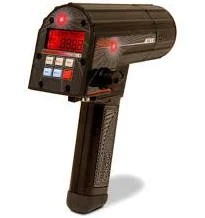
There is proposed legislation to allow the Sheriff’s department to have the use of radar. It may come as a surprise that most Sheriff’s departments do not and are not allowed to use radar speed sensing devices.
The propsoed legislation seeks to AMEND SECTION 63-3-519, MISSISSIPPI CODE OF 1972, TO AUTHORIZE ANY COUNTY SHERIFF OR DEPUTY SHERIFF TO UTILIZE RADAR SPEED DETECTION EQUIPMENT UPON THE APPROVAL OF THE BOARD OF SUPERVISORS; AND FOR RELATED PURPOSES.
The Current law states;
63-3-519. It shall be unlawful for any person or peace officer or law enforcement agency, except the Mississippi Highway Safety Patrol, to purchase or use or allow to be used any type of radar speed detection equipment upon any public street, road or highway of this state. However, such equipment may be used:
(a) By municipal law enforcement officers within a municipality having a population of two thousand (2,000) or more according to the latest or a previous federal census upon the public streets of the municipality, but in no case where the latest federal census population for the municipality is less than one thousand five hundred (1,500) * * *.
(b) By any college or university campus police force within the confines of any campus wherein more than two thousand (2,000) students are enrolled * * *.
(c) By municipal law enforcement officers in any municipality having a population in excess of fifteen thousand (15,000) according to the latest federal census on federally designated highways lying within the corporate limits
…
Proposed, new legislation includes:
(e) By any county sheriff or deputy sheriff upon the county roads of their respective county with board of supervisors approval. Such approval shall be voted on and approved by a majority vote, and the approval shall be spread upon the board minutes of the county.
…
SECTION 2. This act shall take effect and be in force from and after July 1, 2025.
Will this pass? Is this about public safety and protecting and serving? Is this necessary? Or, is this about generating revenue? Will it be abused if passed?
Matthew Thompson is a family law and civil litigation attorney in Mississippi and is keeping an eye on proposed legislation this session.
A child testifying is an often discussed issue between parents and attorneys in child custody cases.
When parents are getting a divorce the child usually knows more than their parents think. The child most likely witnessed fights, bad conduct and sometimes even dangerous conduct.
In Mississippi law, the leading authority is Jethrow vs. Jethrow, 571 So.2d 270 (Miss. 1990). This case lays the groundwork that the Court should use when assessing child testimony. The basic premise is, as follows;
A child witnesses of tender years*, 12 and under for testimony purposes, testifying is subject to the discretion of the Judge. (*this tender years is different than the “tender years” doctrine favoring a mother when a child is very young, under 2-3).
Before allowing such testimony the Judge “should satisfy himself that the child has the ability to perceive and remember events, to understand and answer questions intelligently, and to comprehend and accept the importance of truthfulness.”
Before excluding the testimony of a child witness of tender years in a divorce proceeding, the chancellor at a minimum should follow the procedure required by Crownover v. Crownover, 33 Ill.App.3rd 327, 337 N.E.2d 56 (1975):
The first hurdle is whether the child is competent to testify.
The Judge should confer in camera (meaning in the Judge’s chambers/office) with the child and determine whether or not the child’s testimony should be heard
The Judge has considerable discretion in conducting proceedings of this type, meaning it’s a judgment call.
The court should not, however, reject outright proposed testimony of a child in custody proceedings, where the omission of such crucial testimony might be harmful to the child’s best interests.
The trial court should take great pains to have an in camera conference with the child to determine the competency of the child,
and determine the competency of any evidence which the child might present.
The court should determine whether the best interests of the child would be served by permitting her to testify, or
Whether the child should be sheltered from testifying and being subjected to a vigorous cross-examination.
The Judge should report the essential material matters developed at the in camera conference on the record.
The Court should state the reasons for allowing or disallowing the testimony of the child, and
The Court should note the factual information which the court developed from the conference with the child which would be considered by the court in its ultimate determinations in the case.
Generally, the testimony of a child called as a witness in a divorce case should not be excluded for reasons other than competency, or evidentiary defects, or for the protection of the child. (24 Am.Jur.2d, Divorce and Separation, A 415). There should not be a summary refusal to inquire as to the competency of the child to testify and also of the competency of the proposed testimony of such child in a change of custody proceeding.
“We reiterate that parents in a divorce proceeding should if at all possible refrain from calling any of the children of their marriage, of tender years at least, as witnesses, and counsel should advise their clients against doing so except in the most exigent cases. The reason and wisdom behind this precaution need no amplification. We also hold, however, as we must that no parent can be precluded from having a child of the marriage in a divorce proceeding testify simply because of that fact.”Jethrow v. Jethrow, 571 So.2d 270, 274 (Miss. 1990)(emphasis added).
A child testifying should be avoided, however if it cannot be avoided the above process will likely be used by the Court to determine if and how the child will testify.
Matthew Thompson is a Child Custody Litigation Attorney in Mississippi.
We all run into problems from time to time and sometimes we are even responsible for those problems…
But, one great practice tip is to not make those problems bigger.
If you are doing the WRONG thing, stop! If you are making bad decisions, make better decisions. If your judgment is compromised, acknowledge it and choose better.
Doubling down on the bad and wrong decisions is not a good path forward.
Also, your decisions may be hurting other people. Think about that. A problem you created or you contributed to may hurt someone else. It may hurt an innocent, unintended person.
Another legislative session another attempt to align MS family law with 48 other states…a change that is needed.
Pending legislation seeks to make changes to existing divorce law in Mississippi. House bill No. 1046 proposes to to amend Sec. 93-5-1 to delete the requirement of willful and obstinate from the ground of Desertion and provide a new 13th ground of Irretrievable Breakdown.
Thirteenth.Upon application of either party, the court may grant a divorce when the court finds there has been an irretrievable breakdown of the marriage and that further attempts at reconciliation are impractical or futile and not in the best interests of the parties or family.
Fourth. * * * Continued * * * desertion for the space of one (1) year.
This is needed in MS law as we are 1 of 2 states in the Country that does not recognize a person’s right to a divorce. Mississippi law has created a financial blackmail niche area of practice. This occurs when a party does not have provable grounds for divorce and the other party will not consent. It happens more than you’d think.
Also, opponents indicate this will somehow open divorce floodgates in Mississippi. I contend it will not. MS has the 13th highest divorce rate in the country despite the most stringent laws.
Similar efforts have previously failed every year. Below are just a few blogged here.








 (601) 850-8000 - - BowTieLawyer.MS