Mississippi Courts have not historically favored Joint Custody. A new Bill would require a presumption of Joint Custody is best for a child, that would have to be overcome if a parent doesn’t agree…
Senate Bill 2484 seeks to amend the current custody statute 93-5-24, as follows: “
(2) * * * (a) (i) There shall be a rebuttable presumption that joint custody and equally shared parenting time is in the best interest of the child. If the court does not grant joint custody and/or equally shared parenting time, the court shall construct a parenting time schedule which maximizes the time each parent has with the child and ensures the best interest of the child is met. (ii) The presumption created in subparagraph (i) of this paragraph shall be rebuttable by a preponderance of the evidence. A court that does not award joint custody with equally shared parenting time shall document the reasons for deviating from the presumption. (b) Upon petition of both parents, the court may grant legal and/or physical custody to one (1) parent.”
This is an interesting Bill and in theory how Custody determinations should begin anyway. However, it goes further than current law in creating a rebuttable presumption and then requiring documenting the reasons for deviating from the presumption if the court does not grant joint physical custody and/or equally shared parenting time.
Matthew Thompson is a child custody lawyer and believes mom and dad coparenting and working together is what’s best for the child. A set schedule based on the child, with flexibility when warranted is what is best…
Supervised visitation is Ordered in rare circumstances.
It is typically when the parent has had significant issues with illegal substances, run-ins with law enforcement, severe defiance of prior Orders, mental health issues or present as a danger to the child. (Or a combo of the above)
These parents, of course, have the right to see their child, but the Court’s obligation is to make sure that the child is safe, at all times.
(a) A person commits an offense if the person takes or retains a child younger than 18 years of age:
(1) when the person knows that the person’s taking or retention violates the express terms of a judgment or order, including a temporary order, of a court disposing of the child’s custody;
(2) when the person has not been awarded custody of the child by a court of competent jurisdiction, knows that a suit for divorce or a civil suit or application for habeas corpus to dispose of the child’s custody has been filed, and takes the child out of the geographic area…without the permission of the court and with the intent to deprive the court of authority over the child; or
(3) outside of the United States with the intent to deprive a person entitled to possession of or access to the child of that possession or access and without the permission of that person.
(b) A noncustodial parent commits an offense if, with the intent to interfere with the lawful custody of a child younger than 18 years, the noncustodial parent knowingly entices or persuades the child to leave the custody of the custodial parent, guardian, or person standing in the stead of the custodial parent or guardian of the child.
(c) It is a defense to prosecution under Subsection (a)(2) that the actor returned the child to the geographic area…within three days after the date of the commission of the offense.
(c-1) It is an affirmative defense to prosecution under Subsection (a)(3) that:
(1) the taking or retention of the child was pursuant to a valid order providing for possession of or access to the child; or
(2) notwithstanding any violation of a valid order providing for possession of or access to the child, the actor’s retention of the child was due only to circumstances beyond the actor’s control and the actor promptly provided notice or made reasonable attempts to provide notice of those circumstances to the other person entitled to possession of or access to the child.
(c-2) Subsection (a)(3) does not apply if, at the time of the offense, the person taking or retaining the child:
(1) was entitled to possession of or access to the child; and
(2) was fleeing the commission or attempted commission of family violence, as defined by Section 71.004, Family Code, against the child or the person.
(d) An offense under this section is a state jail felony…
What are the penalties for interference with child custody? Up to two years in jail, A fine of up to $10,000, and Loss of custody.
There’s scuttlebutt that MS may consider a parental interference law as a crime in future sessions.
Right now the only real recourse is a contempt action in Chancery court in Mississippi. contempt doesn’t have the same “teeth” that a criminal offense would.
Matthew Thompson is a child custody lawyer in Mississippi and supports custody law changes that protect parents rights and common sense.
In 2023, the Mississippi Legislature enacted changes in child welfare, enacting a Foster Parents’ Bill of Rights. But, what does this mean…? Stay tuned for a multi-part blog diving into the FPBOR and what it means AND what it doesn’t mean…
Foster Parents’ Bill of Rights and Responsibilities
The Department of Child Protection Services shall extend the following rights to persons who provide foster care and relative care:
(a) A clear understanding of their role while providing care and the roles of the birth parent(s) and the placement agency in respect to the child in care;
(b) Respect, consideration, trust and value as a family who is making an important contribution to the agency’s objectives;
(c) Notification of benchmarks that will be required of the foster parent such as appointments, home visits with department personnel, visitations of the child at school and meetings between department personnel and the child’s family;
(d) Advance notice of information regarding scheduled meetings other than meetings where the Department of Child Protection Services personnel or social workers are going to the foster parent’s home for site visits, appointments and court hearings concerning the foster child;
(e) The opportunity to communicate with professionals who work with the foster child including therapists, physicians and teachers who work directly with the child;
(f) The opportunity to communicate and collaborate, without threat of reprisal, with a department representative when further educational services are needed to ensure the child’s educational needs are met, including services such as an Individualized Educational Plan (IEP), tutoring, occupational therapy, speech therapy and after-school programs;
(g) The opportunity to attend all IEP meetings, along with the department worker, at the child’s school as long as the child is in custody and receiving special educational services;
(h) The opportunity to communicate with the foster child’s guardian ad litem;
(i) The opportunity to attend all youth court hearings involving a foster child occurring while that child is placed in their care without being a party to the youth court action, unless the youth court determines that any foster parent should not be present. Foster parents may attend all youth court hearings and have legal counsel attend and observe with them if the child’s permanent plan is adoption by the foster parents, unless the youth court determines that any foster parent should not be present. Foster parents may communicate with the guardian ad litem in writing at any time. Foster parents may ask to be heard concerning the best interest of the child at any disposition or permanency hearing;
(j) When the dates of the permanency hearing and permanency review hearing have been set by the youth court, and if necessary to fulfill the notice requirements, the judge or the judge’s designee shall order the clerk of the youth court to issue a summons to the foster parents to appear personally at the hearings as provided by Section 43-21-501;
(k) The opportunity to request from the youth court permission to communicate with the child’s birth family, previous foster parents of the child, and prospective and finalized adoptive parents of the child, without the threat of reprisal. However, this right creates no obligation of the birth family, previous foster parents, or prospective and finalized adoptive parents to communicate in return;
(l) Involvement in all the agency’s crucial decisions regarding the child as team members who have pertinent information based on their day-to-day knowledge of the child in care and involvement in planning, including, but not limited to, individual service planning meetings, foster care review, individual educational planning meetings, and medical appointments;
(m) The opportunity to participate in the planning of visitations between the child and the child’s siblings, parents or former guardians or other biological family members which have been previously authorized by the youth court. Visitations shall be scheduled at a time and place meeting the needs of the child, the biological family, and the foster family.
Recognizing that visitation with family members is an important right of children in foster care, foster parents shall be flexible and cooperative with regard to family visits but shall retain the right to reasonable advance notice of all scheduled visitations;
(n) The ability to communicate with department personnel or representatives twenty-four (24) hours a day, seven (7) days a week, for the purpose of aiding the foster parent;
(o) A comprehensive list of all resources available to the foster parent and child, including dental providers, medical providers, respite workers in the area, day cares, and methods for submitting reimbursements;
(p) Support from the family protection worker or the family protection specialist in efforts to do a better day-to-day job in caring for the child and in working to achieve the agency’s objectives for the child and the birth family through provision of:
(i) A copy of the “Foster Child Information Form” and all other pertinent information about the child and the birth family, including medical, dental, behavioral health history, psychological information, educational status, cultural and family background, and other issues relevant to the child which are known to the department at the time the child is placed in foster care prior to the child’s placement with a foster parent or parents. The department shall make reasonable efforts to gather and provide all additional current medical, dental, behavioral, educational and psychological information reasonably available from the child’s service providers within fifteen (15) days of placement. When the department learns of such information after fifteen (15) days of placement, the department shall communicate such information to the foster parent as soon as practicable;
(ii) An explanation of the plan for placement of the child in the foster parent’s home and the ongoing and timely communication of any necessary information which is relevant to the care of the child, including any changes in the case plan;
(iii) Help in using appropriate resources to meet the child’s needs, including counseling or other services for victims of commercial sexual exploitation or human trafficking;
(iv) Direct interviews between the family protection worker or specialist and the child, previously discussed and understood by the foster parents;
(v) Information regarding whether the child experienced commercial sexual exploitation or human trafficking;
(vi) Information related to the Healthy, Hunger-Free Kids Act of 2010. Foster parents shall protect the confidentiality of the child by working directly with a designated school official to complete the application for free lunches.
(q) The opportunity to develop confidence in making day-to-day decisions in regard to the child;
(r) The opportunity to learn and grow in their vocation through planned education in caring for the child;
(s) The opportunity to be heard regarding agency practices that they may question;
(t) Information related to all costs eligible for reimbursement, including:
(i) Reimbursement for costs of the child’s care in the form of a board payment based on the age of the child as prescribed in Section 43-15-17 unless the relative is exempt from foster care training and chooses to exercise the exemption; and
(ii) Reimbursement for property damages caused by children in the custody of the Department of Child Protection Services in an amount not to exceed Five Hundred Dollars ($500.00), as evidenced by written documentation.
The Department of Child Protection Services shall not incur liability for any damages as a result of providing this reimbursement.
(12) The Department of Child Protection Services shall require the following responsibilities from participating persons who provide foster care and relative care:
(a) Understanding the department’s function in regard to the foster care and relative care program and related social service programs;
(b) Sharing with the department any information which may contribute to the care of children;
(c) Functioning within the established goals and objectives to improve the general welfare of the child;
(d) Recognizing the problems in home placement that will require professional advice and assistance and that such help should be utilized to its full potential;
(e) Recognizing that the family who cares for the child will be one of the primary resources for preparing a child for any future plans that are made, including return to birth parent(s), termination of parental rights or reinstitutionalization;
(f) Expressing their views of agency practices which relate to the child with the appropriate staff member;
(g) Understanding that all information shared with the persons who provide foster care or relative care about the child and his/her birth parent(s) must be held in the strictest of confidence;
(h) Cooperating with any plan to reunite the child with his birth family and work with the birth family to achieve this goal; and
(i) Attending dispositional review hearings and termination of parental rights hearings conducted by a court of competent jurisdiction, or providing their recommendations to the guardian ad litem in writing.
(13) The department shall develop a grievance procedure for foster parents to raise any complaints or concerns regarding the provisions of Section 43-15-13(11) or (12).
(14) Nothing in this section shall be construed to create a private right of action or claim on the part of any individual, the department, or any child-placing agency.
Matthew Thompson is a child custody attorney in Mississippi and routinely presents at Guardian Ad Litem training and has presented at Foster Parent Training.
Whether a child should testify is a decision that hopefully you as a parent will never face. The Mississippi Supreme Court, in a 1990 Opinion, held “We reiterate that parents in a divorce proceeding should …refrain from calling any of the children of their marriage, of tender years at least, as witnesses, and counsel should advise their clients against doing so except in the most exigent cases.”- Jethrow vs. Jethrow, 571 So.2d 270 (Miss. 1990).
For testimony purposes a child witness of “tender years” is 12 and under and testifying is subject to the discretion of the Judge.
However, a recent Court of Appeals case requires ALL children be interviewed by the Judge in every custody case if a parent calls the child as a witness. It is now mandatory regardless of the age of the child, regardless of who has custody, and regardless even when the other parent objects believing same will result in harm, emotional or otherwise, due to the very young age of the child and even over the objection of the Guardian Ad Litem appointed for the child. Daly v. Raines, No. 2022-CA-00600-COA
This is a scary proposition for most parents and something to consider when you are litigating. In divorce/custody/family law litigation your children will now be forced to participate if either parent so decides.
Be careful who you have a child with…
Matthew Thompson is a child custody and divorce lawyer in Mississippi and believes that only in exigent circumstance should child custody even be considered . However, the “law” doesn’t always allow for common sense to prevail…
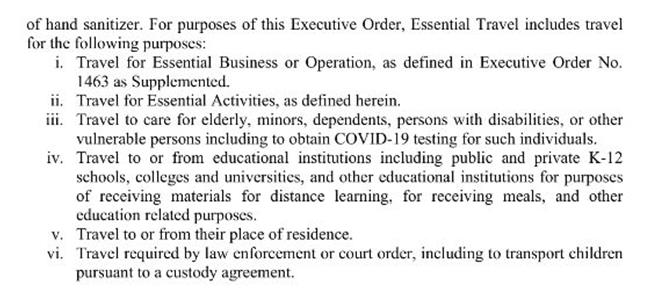
Essential Travel includes, “Travel required by…court order, including to transport children pursuant to a custody agreement.
We are operating in uncharted waters as far as what to do and when to do it regarding getting out of the house. However, generally speaking the Court expects you to abide by its Order unless it is unsafe to so do. The Court then expects parents to act reasonably, communicate and make reasonable accommodations.
COVID-19 is NOT an excuse to be a terrible parent.
There are a lot of ways to interact safely; in-person, ( so long as it is safe to do so), Facetime, Zoom, telephone, email, text, video and other electronic means.
Matthew Thompson is a Child Custody lawyer and encourages parents to be reasonable and not try to take advantage of these circumstances. Do what you believe is in the best interests of your child.
We are getting many questions concerning Custody and Visitation schedules and exchanges of children during this time. The first advice to give is to use common sense and follow the recommendations of authorities.
From the CDC,The best way to prevent illness is to avoid being exposed to this virus. The virus is thought to spread mainly from person-to-person. Between people who are in close contact with one another (within about 6 feet). Through respiratory droplets produced when an infected person coughs or sneezes. These droplets can land in the mouths or noses of people who are nearby or possibly be inhaled into the lungs. If the necessary precautions have been taken, no one in either home is sick or showing symptoms, and no one in the home is in the vulnerable class, visitation exchanges should take place as ordered.
If someone has been exposed to the virus or showing symptoms or is traveling from an infected area, be SOCIALLY RESPONSIBLE! Try to avoid travel and exposing other individuals to the virus. While children are resilient and may be asymptomatic, they can still spread the virus to vulnerable persons.
If visitation exchanges are not possible, utilize FaceTime or video chats to maintain daily contact with your children. Parents need to work together for the safety and well being of everyone, which calls for flexibility and access, whether direct or remotely through technology.
Chad King is a Child Custody lawyer in Mississippi and reminds parents that being reasonable is not a weakness.