Tag Archives: neglect

Youth Court Permanency Hearing(s), Review Hearing(s) & You. Deadlines Changing…

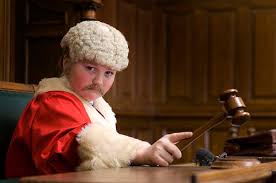
A still-alive MS Bill seeks to tweak the Youth Court timeline when a child has been adjudicated neglected and abused for a permanency hearing.

The current law requires that the youth court shall conduct a permanency hearing within one hundred twenty (120) days or every sixty (60) days for children under three (3) years of age after the earlier of:

(i) An adjudication that the child has been abused or neglected; or

(ii) The date of the child’s removal from the allegedly abusive or neglectful custodian/parent.

The proposed changes requires;

the youth court shall conduct a permanency hearing within * * * three (3) months * * * after the earlier of the following and every three (3) months thereafter:

(i) An adjudication that the child has been abused or neglected; or
(ii) The date of the child’s removal from the allegedly abusive or neglectful custodian/parent.

This change is not that significant and likely will not effect you.

Matthew Thompson is a child welfare attorney and noticed this when review pending legislation and needed a filler blog for the week of Spring Break.

Red Flags of (Child) Abuse

An estimated 558,899 children (unique incidents) were victims of abuse and neglect in the U.S. in 2022, the most recent year for which there is national data. That’s 8 children out of every thousand. CDC & National Children’s Alliance.

1. Changes in “normal” or “routine” behavior. Abuse can lead to many changes in behavior. Abused children often appear scared, anxious, depressed, withdrawn or more aggressive.

2. Returning to earlier (reversion) behaviors. Abused children may display behaviors shown at earlier ages, such as thumbsucking, bedwetting, fear of the dark, or fear of strangers. For some children, even loss of acquired language or memory problems may be an issue.

3. Fear of going home. Abused children may express apprehension or anxiety about leaving school or about going places with the person who is abusing them or exhibit an unusual fear of a familiar person or place.

4. Changes in eating (wide swings of overeating or refusing to eat). The stress, fear, and anxiety caused by abuse can lead to changes in a child’s eating behavior, which may result in weight gain or weight loss.

5. Changes in sleeping (seen as trouble sleeping, insomnia). Abused children may have frequent nightmares or have difficulty falling asleep and as a result may appear tired or fatigued.

6. Changes in school performance and attendance. Abused children may have difficulty concentrating in school or have excessive absences, sometimes due to adults trying to hide the child’s injuries from authorities.

7. Lack of personal care or hygiene. Abused and neglected children may appear uncared for. They may present as consistently dirty and have severe body odor, or they may lack sufficient clothing for the weather.

8. Risk-taking behaviors. Young people who are being abused may engage in high-risk activities such as using drugs or alcohol or carrying a weapon.

9. Inappropriate sexual behaviors (mimicking what they’re seeing). Children who have been sexually abused may exhibit overly sexualized behavior or use explicit sexual language and may exhibit symptoms of a genital infection.

10. Unexplained injuries (injuries that don’t make sense). Children who have been physically abused may exhibit unexplained burns or bruises in the shape of objects. You may also hear unconvincing explanations of a child’s injuries.

Source https://www.childsafe-sa.org/resources/know-the-10-signs-of-child-abuse/

Matthew Thompson and Chad King are child welfare attorneys in the State of Mississippi. They have represented natural parents, foster parents, grandparents, other relatives, fictive kin, children and the Agency (Child Protection Services) throughout their decades of practice. (NOT all at the same time).

Youth Court in Mississippi

Youth Courts deal with matters involving allegations of abuse and neglect of children.(Youth Courts also handle cases involving offenses committed by juveniles, persons who have not reached the age of 18 may be subject to the Youth Court, although there are some exceptions. Some offenses which would be treated as crimes if committed by adults are known as “delinquent acts” when they involve juveniles.”)

21 counties have a County Court Judge serving as Youth Court Judge. In counties which do not have a County Court, the Chancery Judge may hear Youth Court matters, or the Chancery Judge may appoint a lawyer to act in a judicial capacity as Youth Court Referee. The city of Pearl also has its own municipal Youth Court.

In Madison County the County Court Judges also serve as Youth Court Judges. In Hinds and Rankin Counties, they have Youth Court Judges that serve in dedicated Youth Courts.

Child abuse can be:

  • Emotional:anything said or done that is hurtful or threatening to a child, such as name calling, belittling a child, or making threats of harm.
    • Name calling; “You’re stupid.”
    • Belittling; “I wish you were never born.”
    • Destroying child’s possessions or harming pets.
    • Threatens to harm child or people they care about; “I’m going to choke you,” or “I’ll hurt your sister.”
    • Locking a child in a closet or box.
    • Rejecting a child.
    • Isolating a child.
  • Sexual Abuse is any inappropriate touching by a friend, family member, anyone having ongoing contact and/or a stranger, such as:
    • Touching a child’s genital area.
    • Any type of penetration of a child.
    • Allowing a child to view or participate in pornography.
    • Prostitution, selling your child for money, drugs, etc.
    • Forcing a child to perform oral sex acts.
    • Masturbating in front of a child.
    • Having sex in front of a child.
    • Touching a Child’s genital area.
  • Physical:any type of contact that results in bodily harm or bruising, or physically restraining a child improperly.
    • Hitting or slapping a child with an extension cord, hands, belts, fists, broom handles, brushes, etc.
    • Putting child into hot water.
    • Cutting the child with a knife or any other sharp object.
    • Shaking or twisting arms or legs, yanking a child by the arm.
    • Putting tape over a child’s mouth.
    • Tying a child up with rope or cord.
    • Throwing a child across a room or down the stairs.
  • Neglect: not meeting the basic needs of the child, including not giving essential medicines or food, leaving a child unsupervised, providing inadequate protection from the weather.
    • Medical – not giving a child life-sustaining medicines, over medicating, not obtaining special treatment devices deemed necessary by a physician.
    • Supervision – leaving child/children unattended and leaving child/children in the care of other children too young to protect them (depending upon the maturity of the child).
    • Clothing and good hygiene – dressing children inadequately for weather, persistent skin disorders resulting from improper hygiene.
    • Nutrition – lack of sufficient quantity or quality of food, letting a child consistently complain of hunger and allowing the child to rummage for food.
    • Shelter – having structurally unsafe housing, inadequate heating, and unsanitary housing conditions.

Within a neglect or abuse case there are several phases. Upon a complaint or report, which can be anonymous, Youth Court will hold a Shelter Hearing. It is akin to an emergency hearing. The Youth Court will determine if immediate action needs to be taken. Typically, the next Youth Court determination will be an Adjudication Hearing. This is to determine if the child was neglected or abused. Lastly, youth Court will conduct a Disposition Hearing. This is to determine the final outcome.

Youth Court’s #1 goal is reunification when and where possible. Youth Court cases involving neglect and abuse are not seeking to punish and there could be separate criminal consequences for acts of neglect or abuse for the perpetrator.

The “players” in a Youth Court proceeding are the JudgeYouth Court Prosecutor, Guardian Ad Litem (attorney for the child and sometimes a non-attorney investigator), some Courts now have Parent’s Representatives (attorneys appointed for a parent), or privately hired Attorneys.

Matthew Thompson is a Child Custody attorney in Mississippi and has handled multiple Youth Court cases throughout Mississippi.

img_6390

Indicators of Abuse.

Regrettably, in family law instances of child abuse are ever-present. The Mississippi Department of Human services, along with law enforcement and the Courts are tasked with dealing with these critical circumstances.

The following are instances and indicators of abuse.

Emotional/Verbal Abuse is anything said or done that is hurtful or threatening to a child and is the most difficult form of maltreatment to identify:

  • Name calling; “You’re stupid.”
  • Belittling; “I wish you were never born.”
  • Destroying child’s possessions or harming pets.
  • Threatens to harm child or people they care about; “I’m going to choke you,” or “I’ll hurt your sister.”
  • Locking a child in a closet or box.
  • Rejecting a child.
  • Isolating a child.

Sexual Abuse is any inappropriate touching by a friend, family member, anyone having on-going contact and/or a stranger, such as:

  • Touching a child’s genital area.
  • Any type of penetration of a child.
  • Allowing a child to view or participate in pornography.
  • Prostitution, selling your child for money, drugs, etc.
  • Forcing a child to perform oral sex acts.
  • Masturbating in front of a child.
  • Having sex in front of a child.
  • Touching a Child’s genital area.

Physical Abuse is any type of contact that results in bodily harm such as bruising, abrasions, broken bones, internal injuries, burning, missing teeth and skeletal injuries:

  • Hitting or slapping a child with an extension cord, hands, belts, fists, broom handles, brushes, etc.
  • Putting child into hot water.
  • Cutting the child with a knife or any other sharp object.
  • Shaking or twisting arms or legs, yanking a child by the arm.
  • Putting tape over a child’s mouth.
  • Tying a child up with rope or cord.
  • Throwing a child across a room or down the stairs.

Neglect means not meeting the basic needs of the child and is the most common form of maltreatment.

  • Medical – not giving a child life-sustaining medicines, over medicating, not obtaining special treatment devices deemed necessary by a physician.
  • Supervision – leaving child/children unattended and leaving child/children in the care of other children too young to protect them (depending upon the maturity of the child).
  • Clothing and good hygiene – dressing children inadequately for weather, persistent skin disorders resulting from improper hygiene.
  • Nutrition – lack of sufficient quantity or quality of food, letting a child consistently complain of hunger and allowing the child to rummage for food.
  • Shelter – having structurally unsafe housing, inadequate heating, and unsanitary housing conditions.

Call 800-222-8000 or 601-432-4570 to report abuse, neglect or exploitation of a child in Mississippi.

Reports can also be made online at https://www.msabusehotline.mdhs.ms.gov

Division of Family & Children’s Services
800-345-6347 | 601-359-4999

Matthew Thompson is a Child Custody Attorney in Mississippi.

Follow the blog: #BowTieLawyer Visit the website: #Thompson Law Firm You may also contact Matthew with your family law matter or question at (601) 850-8000 or Matthew@bowtielawyer.ms

Emergency! The 411 on 911 in Court

I get the call, at least, weekly.  It is an EMERGENCY!  I have to get into Court yesterday to solve some critical issue.  However, once I start asking questions the emergency is more like an inconvenience.

For Court purposes, think of an emergency as being a true emergency; danger of life or limb, or the immediate threat of imminent and irreparable harm.

The Court judges emergencies on a case by case basis to make sure they have merit.  Some examples  of emergencies include;

  • when the custodial parent refuses life saving medical treatment, against medical advice
  • when one parent absconds with a child, it’s not “their” time and refuses all contact
  • when a parent is using illegal drugs in the presence of the child and/or exposing the child to that lifestyle
  • is abusing the child
  • is neglecting the child

Some examples of non-emergencies, at least for Court purposes;

  • is 15 minutes late for a pick-up or a drop-off, even multiple times
  • stops paying the house mortgage
  • forgot to give the recommended dose of antibiotics
  • returns the child in the same clothes that he was dropped off in
  • returns the child with a scratch or bruise caused by kids being kids

Emergencies are quite often judgment calls and the Judges treat these seriously when they are serious and are nonplussed when a lawyer files an Emergency Petition over a non-urgent circumstance.  The Judges are also somewhat on guard against persons using ERs for tactical advantage and this can and does backfire on the petitioner if it is not a true emergency.

Matthew Thompson is a family law attorney in Mississippi and is careful on the draw about declaring emergencies.

Follow the blog: BowTieLawyer 

You may also contact Matthew with your family law case, question or concern at (601) 850-8000 or Matthew@BowTieLawyer.ms

img_6390

Guardian Ad Litems – Representing Children in Court

The Judge’s job in a custody/divorce case is  to determine the best interests of the children when mom and dad are fighting. The Judge considers mom’s testimony and evidence as well as dad’s and even the children’s testimony (clickable).  But there is also another implement in the tool box of information available to the Court, the Guardian Ad Litem (GAL).

imgres.jpg

A GAL is a person, usually a lawyer, appointed by the Court to take on one of two roles.

1) The first of these is to be an Attorney for the Children.  To represent the child in the same capacity any attorney would represent a client, with the same duties, obligations and confidences that every attorney owes to each client.  This role is fairly uncommon in custody/divorce actions.

2) The much more common role is that of Investigator for the Court.  Judge’s routinely appoint an attorney to serve as the Court’s eyes and ears on the ground.  Judge’s are limited to what they can hear.

They are limited by time constraints, objections, admissibility issues, and lawyer’s abilities.  A GAL appointed by the Court as an Investigator has much more readily available access to information.  

  • GALs interview mom, dad and the children.
  • They can interview teachers, doctors, counselors, friends, and coaches.  
  • They can practically speak to anyone they think they need to.  
  • A GAL can inspect the home where the children stay and can do so unannounced.  
  • GALs can pay surprise visits.  
  • GALs can access school records, medical records, counseling records.  
  • GALs can request medical evaluations and even psychological evaluations.  
  • GALs, by and large, can do what is necessary to get to the bottom of the issues in a case.

So why does every case NOT have a GAL? 

1) They are only required in abuse/neglect cases, otherwise it is discretionary. The Court may not allow for a GAL.

2) It adds another layer of expense, another attorney to pay.  The Court usually makes both parties pay.

3) It can create delay.  The GAL may ask for more time to conduct the investigation and scheduling trial depends on another lawyer’s calendar.

4) The GAL may not believe you.  They are human and may believe the other parent over you, plus you may be lying to them.  It adds risk.

5) They may not do a good job.

GALs typically prepare a report that is provided to the Court and both lawyers. It recounts their efforts, interviews, documents reviewed and conclusions drawn.  The GAL report also includes recommendations, usually.  The Court is not required to follow the GAL recommendation.

Guardian Ad Litems can be a critically important tool available to the Court or parties in a contested custody battle, but the involvement of a GAL also has risks and expenses associated too.  Talk to your lawyer if you have concerns about abuse/neglect and whether a GAL may help in your case.

Matthew Thompson is a family law attorney that has served as a GAL and has handled numerous cases involving GALs.  He has seen the good, the bad and the ugly.  He also conducts GAL training sessions at Continuing Legal Education Seminars for  lawyers that want o become certified GALs;  topics include conducting GAL Custody Evaluations, GAL Investigations, GAL Reports and Testifying.

Follow the blog: BowTieLawyer    Visit the website: Thompson Law Firm

You may also contact Matthew with your family law case, question or concern at (601) 850-8000 or Matthew@bowtielawyer.ms.