Category Archives: General Legal

Hinds Chancery Judge Race

Hinds County has four full-time Family Law Judges. The qualifying deadline is May for those persons seeking to become the next Chancellor. Qualifiers, so far, include;

download.png

Dewayne Thomas Chancery Court Judge 5 Sub 5-1

Judge Thomas is a shoe-in to win. Not only because he is unopposed currently, though that helps, but also because he has a reputation for fair rulings, a good judicial temperament and willingness to listen.


Subdistrict 2 is the race to watch right now.(primarily because it is the only contested race).

Patricia Wise Chancery Court Judge 5 Sub 5-2

Judge Wise is the incumbent. She has served as a Chancellor since being elected in 1989. Judge Wise has reputation for being tough and insisting that attorneys and litigants respect the Court and follow the required procedures. The rumor was Judge Wise considered retirement, but she has qualified and is seeking another four years.

Reginald Harrion Chancery Court Judge 5 Sub 5-2

Reginald Harrion is challenging Judge Wise for the District 2 seat. Harrion, an associate with Schwartz & Associates, P.A., is admitted to practice in Mississippi, Arizona and Georgia. He has been practicing for nearly 20 years.


Denise Owens Chancery Court Judge 5 Sub 5-3

Judge Owens is the Senior Chancellor, meaning she has been the longest-serving Chancellor of the current Judges. Rumors swirled about Judge Owens possibly retiring as well. However, Judge Owens qualified to run again. Judge Owens has a good reputation and is known for thoughtful, fair rulings.


Steven P. Nixon Chancery Court Judge 5 Sub 5-4

Subdistrict 4 will be lead by a new Chancellor in 2019, with the retirement of Judge Singletary. So far, only one candidate has qualified for this seat, Steven Nixon. Nixon has been in private practice since 2004 and has also served as Municipal Court Judge in Clinton. Nixon has a good reputation as an attorney and will make a good jurist.

The rumor-mill has at least another attorney qualifying for this seat, but has not as of the time of this posting.

Matthew Thompson is a Family Law Attorney in Mississippi and limits his practice to almost exclusively Chancery Court in the State.


img_6390


When an “Agreement” is Not an Agreement.

Let’s agree to disagree.

download.jpg

Parties in a lawsuit have a lot of latitude to agree to settlement terms. This is certainly true in divorce. Virtually everything is negotiable and if an agreement can be reached, usually it will be approved by the Court.

However, to be an enforceable agreement it must be approved by the Court. Until such time as your agreement is reduced to writing, signed and approved by the Court, it is on iffy ground as to enforceability issues. While some issues may be contracted without Court approval in a family law case, such as property division and alimony, some issues can not be enforced absent Court approval, such as child custody related terms.

Likewise, “changing” your Court papers without Court approval is dicey. Swapping out a holiday here or a week there is not usually a big deal, but changing payment terms, amounts, or duration can lead to serious consequences if done without Court approval. Child support vests as it comes due and absent exigent circumstances cannot be forgiven.

An agreement to agree is no agreement at all.

Matthew Thompson is a Divorce Attorney and reminds you to have your Agreement approved by the Court in an Order.

img_6390

Deadlines matter.

In life, there are deadlines.

download.png

1. the latest time or date by which something should be completed.
“the deadline for submissions is February 5th”
historical
2. a line drawn around a prison beyond which prisoners were liable to be shot.
Deadlines induce stress, anxiety and even panic. Deadlines, or rather, meeting deadlines is critical to be successful in life. Projects, bills and responses have deadlines. Sometimes there may be false deadlines, sometimes deadlines may have dire consequences. Knowing the difference is key.
In law school I took Counseling & Negotiation. It was an upper level class taught by an Adjunct Professor, X.M. “Mike” Frascogna. About half way through the semester he made an offer, any student would be guaranteed a “C” if they attended the remaining classes. They did not have to take the final. I recall a student took that offer. I did not consider it.
The final required us to negotiate with the professor for our final grade. There was no set exam. Their were wild stories of students doing wild stunts to get an A. However, one of the lessons that stuck with me was either not allowing the other side to know your deadline or setting a deadline that you know would put pressure on the other side. He told the story of an international negotiation where one person let the other side know he was flying out in 4 days. They wined and dined him, showed him the sights and otherwise occupied his time for 3 1/2 days. On the last day, the traveler agreed to a worse deal because it had to be finalized that day.
Deadlines matter.
Matthew Thompson is a Family Law Attorney in Mississippi and negotiated his way to an A in Counseling & Negotiation.
img_6390

Can I Change the Locks?

Can I change the locks on the marital home?

download.jpg

Yes.  You can change the locks if it is your house, condo, apartment, or camping trailer.  This includes;

  • purchasing the home
  • leasing (applicable for divorce purposes ONLY, your lease may say otherwise)
  • renting
    • Assuming there is not a Court/Temporary Order preventing you from accessing your home.

Can he/she change the locks without telling me?  

Yes, however you/he/she can let yourself in if it’s your residence and there is no Court Order preventing you from accessing your home.  If you are purchasing the home, or leasing or renting the abode, apartment, condo or camping trailer you can let yourself in.

Matthew Thompson is a divorce attorney in Mississippi and reminds you to also change the garage entry door and reprogram the garage door openers.

img_6390

Participation Trophies & You…

I hear and read a lot about the downfall of society. I see it too, sometimes.

download.jpg

But what I hear often is the wailing about the travesty of Participation Trophies. Parents, in a huff, saying that the idea of getting an award just for showing up promotes weakness, unreasonable expectations and an attitude of undeserved reward.

These same parents say that when they were a kid that they earned the trophies they received or they didn’t get one…along with walking to school uphill, both ways in the snow. That getting a trophy for “nothing” means the child will still be living at home when they are 30, in mom’s basement playing video games and eating chips.

But guess what? These same parents are buying the Participation Trophies. I have never seen an 8-year old call Mars & Steele and place an order for 16, plasti-chromed figurines atop a pedestal, requesting that each be engraved with “Go Tigers! 2017”

Participation Trophies are not the downfall of society. They are a side-effect from either the parent not receiving a trophy when they were that age or from the parent that did receive one that is trying to prevent their child from experiencing the feeling you get when you don’t get a trophy.

Teaching your child to be a hard worker, to be strong and to earn what you work for is YOUR job as a parent. It is not the job of the Coach for the 8-year old soccer team. His job is to teach fundamentals, have fun and make sure the snack list is circulated and the parents sign up!

Matthew Thompson is a former 8-year old soccer coach and while his team may not have won every game, they had the best snacks!

img_6390

Dividing Your Divorce; Bifurcating Your Case.

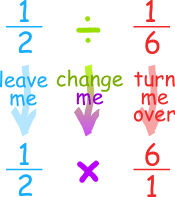
Today’s post is about “math.” It’s not really, but it is about an option that may be available in your divorce case.

download.png

Bifurcating your case is dividing the divorce case from the custody/property/financial aspects of your case. It is not often done, but can be a useful tool when a party does not have grounds and the other party does not want the divorce, or when a party does have grounds and the other issues (custody/property/financial ) will take a considerable amount of time to be decided.

The basic process is requesting the Court to divide the case via  motion, first making a determination if grounds exist and thereafter deciding the remaining issues if the Court awards a divorce.

While not right in every case, it can be a significant option in protracted litigation or could preempt unnecessary litigation.

Matthew Thompson is a Divorce & Child Custody attorney in Mississippi and reminds you that bifurcation may can add to your case by subtracting issues before the Court.

img_6390


Don’t Lie…much.(& never to the FBI).

Tip of the day: When testifying, do NOT lie. Also, do NOT lie to the FBI.

download.jpg

Lying in Court is perjury, not smart and causes you to lose credibility with the Judge. Lying to your lawyer results in frivolous matters being filed, tried and ultimately can open you up to sanctions of the Court.  Lying to the FBI gets you indicted.

lie
noun
noun: lie; plural noun: lies
an intentionally false statement.
  1. synonyms: untruthfalsehoodfibfabricationdeception, piece of fiction, falsification

If you aren’t sure what the truth is then just say so. Don’t lie.

img_6390


Child Custody In Mississippi

There are 2 types of custody in Mississippi Chancery Courts.download.jpg

  1. Legal custody refers to the decision-making rights regarding your child’s health, education and general welfare.

Legal custody, most commonly awarded as “Joint Legal Custody,” requires that each parent keep the other parent reasonably informed of the child’s goings on. This includes not only health, education, and general welfare, but also school and activity schedules, medical appointments and any major matter regarding the child’s life

It requires that parents communicate and cooperate when it comes to making decision about the well-being of the child. It certainly includes informing the other parent if a move is anticipated.

Legal custody includes sharing the status of the child’s well-being and location in emergency situations.

If there is going to be a fight in a custody case it will be over Physical Custody.

2.) Physical Custody is different than Legal custody. Physical custody concerns which parent has actual, physical possession of the child.

Within Physical custody there are officially only 2 types;

1) Joint Physical custody which by statute means each parent spends a significant portion of time with the child (though it does not have to be 50/50); and much more common is the second type

2) (Sole) Physical custody to one parent, subject to the other parent’s visitation. This is far more common in Mississippi.  A lot of your Agreements may have the term “primary” in the physical custody language and some Judges even insist that it be specified, but “primary” has no statutory significance, meaning it is not a term that carries legal meaning.  Lawyers, including myself, still use the term however.

If the parents cannot agree on Custody the Court will conduct what is known as an “Albright Analysis.”  Albright v. Albright, 437 So. 2d 1003 (Miss. 1983), is a Mississippi case from the early 1980’s that lists 13 factors that the Court must consider when making an initial custody determination.  The specific facts of your case are considered as they relate to each factor and the Court makes a determination as to which factor favors which parent. The Court also determines how to weigh each factor. For instance, the sex of the child while considered, will likely not count as much as the continuity of care for the child. The paramount consideration is “the best interests of the child.

A court determines that by looking at the following factors:

1.       Age of the child.

2.       Health of the child.

3.       Sex of the child.

4.       Continuity of care prior to the separation.

5.    Which parent has the better parenting skills and the willingness and capacity to provide primary child care.

6.       The employment of the parent and the responsibilities of that employment.

7.       Physical and mental health and age of the parents.

8.       Emotional ties of parent and child.

9.       Moral fitness of the parents.

10.     The home, community and school record of the child.

11.     The preference of the child at the age sufficient to express a preference by law. (Must be at least 12, and it’s ONLY a preference)

12.     Stability of home environment and employment of each parent.

13.     Other factors relevant to the parent-child  relationship.

For additional information please click Dads Have Rights Too!

**Note, marital fault should not be used as a sanction in custody awards. Relative financial situations should not control since the duty to support is independent of the right to custody.  Differences in religion, personal values and lifestyles should not be the sole basis for custody decisions.

Matthew Thompson is a Child Custody attorney in Mississippi and will fight for your custody and visitation rights.

img_6390