
Holiday Friday Fun
You do NOT have to Like it, Share it or Tag a Friend, but you do have to leave a clever comment/ family law blog idea to WIN!

This contest is entirely subjective. My office will compile the comments/ideas and pick a winner. You then can retrieve your YETI Hopper. *(Bow Tie not included).
Examples:
Go! Comments may be left on FaceBook or the Blog comment section.
The 6th Amendment to the Constitution guarantees you the right to an attorney and a speedy trial, but this is concerning Criminal prosecutions…NOT divorce.

In divorce cases and most Family Law cases you do NOT have the right to a court appointed attorney.
The exception, Termination of Parental Rights cases, is only after a showing of financial inability.
The other time there’s a Court-Appointed Attorney, a Guardian Ad Litem, the parties still typically have to pay for that person from their own pockets and they represent the child, or more often are an investigative arm of the Court.
Do you need an attorney? Yes. Will the Court give you one? Probably not.
Matthew Thompson is a Family Law attorney in Mississippi.

Research has found that men who choked their partners were 10 times more likely to eventually kill them.

A CBS News article reported that the Oklahoma City Police Department is among the forces using the 16-question checklist, which is designed to help officers identify victims who are likely to be killed.
By answering the below questions, the more times a victim answers “Yes” to the questions, the more likely domestic violence may lead to a victim’s death. The checklist will be used across the state of Oklahoma. Authorities in Maryland say fatalities have dropped 30 percent since they started using it.
Below are the 16 questions contained in the “Domestic Violence Risk Assessment” checklist:
1. Has he/she ever used a weapon against you/threatened you with a weapon?
2. Has he/she ever threatened to kill you or your children?
3. Do you think he/she might try to kill you?
4. Does he/she have a gun or can he/she get one easily?
5. Has he/she ever tried to choke you?
6. Is he/she violent or constantly jealous or does he/she control most of your daily activities?
7. Does he/she follow or spy on you or leave threatening messages?
8. Have you left him/her or separated after living together or being married?
9. Is he/she unemployed?
10. Has he/she ever tried to kill himself/herself?
11. Do you have a child/children together?
12. Do you have a child that he/she knows is not his/hers?
13. Has he/she been physical toward the child(ren) in a way that concerns you?
14. Does he/she have an alcohol/substance abuse problem?
15. Has he/she interfered with a 911 call?
16. Is there anything else that worries you about your safety?
If you are in Mississippi and need help please do one or all of the following by contacting the Mississippi Coalition Against Domestic Violence;
If you are in danger, call 911.
If you need immediate assistance after hours: Call 1-800-799-SAFE(7233).
Local to the metro area may call 601-981-9196
If you wish to be connected with someone in your area regarding domestic violence, volunteering or making a donation, call 1-800-898-3234.
Matthew Thompson is a Family Law Attorney in Mississippi and encourages victims of domestic violence to have an emergency plan and seek immediate help.
Q: Is this a true and accurate copy?
A: No. I don’t know whose writing this is…I don’t know what those circles mean…
Attorney: Objection. It’s obviously not a true copy, as the original does not have writing and circles on it.
Court: Sustained.
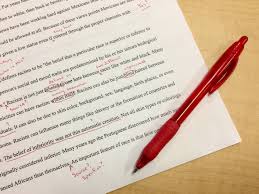
Court rules can be tediously picky. If something isn’t phrased the right way, authenticated sufficiently, or previously produced, if requested, you may not be able to use it. This is true even if it is something important, reliable and tangible to the issues before the Court. This is just one reason why Court is so frustrating.
I had a case where the witness highlighted certain portions of an email. When the time came to testify about the email, the other party pretended to not recognize it, nor remember it. He wasn’t sure if he used that email address at that time. He certainly knew he didn’t highlight it and wasn’t sure he had seen it before. It was a dance of avoiding the obvious.
Ultimately, the email came in when the sponsoring party testified and I believe the other party lost credibility in feigning ignorance, however it was a good lesson on the rules/tricks of Court.
Matthew Thompson is a Family Law attorney in Mississippi and encourages you to practice, with your attorney, your testimony and how to authenticate an exhibit and get it into evidence.

I see it almost every day, some DIY-divorce-in-a-box for the low, low price of $395.99 and it’s even “state specific!”

These are almost always a disaster. They are a disaster for several reasons, but primarily because they are so often wrong, incomplete and inadequate. There is no uniform body of law in our country for Family Law. Each state has their own take on things, nuances and requirements.
Most lawyers are not out just to get your money. They want to help, usually. They want to be paid for their experience, expertise and specialized education.
Are there some duds? Yes. But, if you spend a few minutes researching, ask a trusted friend or other professional, you can usually get aimed in the right direction.
It may cost a little more on the front end, but long term having it done right is worth it.
Matthew Thompson is a family law attorney in Mississippi and hires a lawyer when he needs one too.


 (601) 850-8000 - - BowTieLawyer.MS