Mediating Family Law; Resolving Your Case on Your Terms or Not.

I will be mediating a family law case, or rather agreeing to mediate a divorce, custody and property division case in the near future.  Mediation is a process whereby the parties agree to meet and attempt to resolve all issues prior to going to trial or without having to go to trial.

In a mediation the parties agree to hiring a third-party, typically another attorney or retired judge, to “hear” their  case.  Now the mediator is NOT the main authority.  In fact, the mediator cannot compel either of the parties to do or agree to anything. The mediator’s role is to point out the strengths and weaknesses of each sides case and to try to find common ground.  Sometimes the mediation is based on reason and logic and sometimes it is based on emotion or just some number someone is trying to reach. Almost anything can be mediated, though a rule of thumb is to not mediate when not prepared factually, legally (research wise), or with an abuser.

Pros:

  • The parties have the ultimate say in the final outcome.
  • Mediator gets to hear “everything,” so a party may have their “say.”
  • It is appeal proof. (unless fraud involved)
  • It can save fees and expenses.
  • It can reveal strengths and weaknesses in a case.
  • It works.  (approx 90% of the time)

Cons:

  • If there is no agreement there is no settlement.
  • Mediator’s opinion is non-binding.
  • It can add a layer of expense.
  • It can be frustrating.
  • It may not work.

Mediation is not a silver bullet to end litigation. It is just another implement in the tool box of resolving and litigating cases.

Is mediation right for you?  Almost any matter can be mediated. Speak to your attorney for more information.

Matthew Thompson is a family law attorney and believes in the mediation process, though it may not be right in every situation.

img_6390

Cheetah, Cheetah! (The Cheater Gets Nothing? Not Necessarily.)

Your dirty, no-good, lying, sorry sack of spouse is a CHEATER. Obviously when the Court hears about this that so-and-so will be excoriated and will never show their face again in town. They certainly won’t get anything, right?

In Mississippi, an Affair is a fault ground for divorce. If your spouse is guilty of an affair it will get you a divorce, but don’t count on that fact alone meaning you get everything and they get nothing. It does not mean that he will have to pay you or that the CHEATER cannot get alimony or even custody.

Back in the olden days, some may say the “Good ‘Ol Days”, a lady was barred from receiving alimony if she were guilty of adultery. This is no more, though contributions to the stability and harmony of the marriage are considered and an affair can play a part in what is ultimately received.

Additionally, a spouse having an affair is not barred from being awarded custody. In the olden days a mom that had an affair could be putting her children at risk. Today, a parent’s adultery or morality pursuant to the Albright Custody Factors is considered, but an affair with no adverse impact to the child – will not automatically mean the CHEATER will not get custody.

So, cheat with impunity? No. Just know that cheating ain’t what it used to be, unless it is.

Matthew Thompson is a family law attorney and Cheetahs do NOT change their spots.

Follow the blog: BowTieLawyer Visit the website: Thompson Law Firm

You may also contact Matthew with your family law case, question or concern at (601) 850-8000 or Matthew@wmtlawfirm.com.

black bow

Great Dad!


Great Dad!

Dads have rights too.

I don’t know who to photo credit this picture, but hat tip to Hunter Brewer for sharing on FB this morning.

Matthew Thompson is a family law attorney and knows that being a great parent is a full-time job.

Follow the blog: BowTieLawyer    Visit the website: Thompson Law Firm

You may also contact Matthew with your family law case, question or concern at (601) 850-8000 or Matthew@wmtlawfirm.com.

black bow


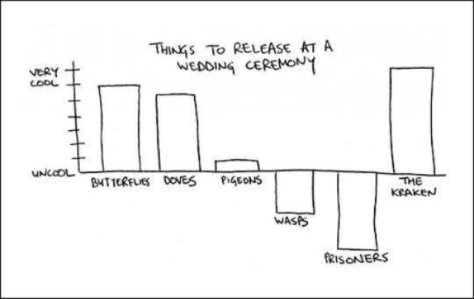
Things to Release at a Wedding Ceremony.

Things to Release at a Wedding Ceremony.

Scale of “Coolness” of potential things released at a Wedding Ceremony

Domestic Relations vs. Domestic Incarcerations; Jail for bad behavior.

In Family Law, dealing with divorce and child custody issues are enough to keep any attorney busy.  With ever-changing emotions, gray areas of the law relating to dividing assets and assessing how a particular judge may determine the best interests of a child, attorneys and clients don’t need more on their plate to deal with.  But, there is more…Jail!

download

I have previously blogged on going to Jail for having sex and not paying child support, but there is another reason folks go to jail in their family law case, letting their emotions get the best of them.

It is quite common for Family law matters to “spill over” into Justice Court or Municipal Courts.  Most commonly are assault, trespass and domestic violence violations.  I have included portions of the statute for you to review, below and italicized common issues.

The severity of these charges depends in large part on the severity of the circumstances, the severity of injuries, if any, and whether there is a history of violations or abuse.  Unfortunately, it is not uncommon for one spouse to attempt to use these criminal allegations to “one-up” the other and attempt to use the criminal charges as leverage in divorce negotiations.

Lawyers would be wise to warn their clients about the possibility of a client losing their cool, even once, leading to criminal charges and that, perhaps, their former significant other may “create” circumstances in the hopes of using those against them in a later or pending divorce action.

§ 97-3-7. Simple assault

(1) (a) A person is guilty of simple assault if he (i) attempts to cause or purposely…causes bodily injury to another; (ii) negligently causes bodily injury with a deadly weapon… or (iii) attempts by physical menace to put another in fear of imminent serious bodily harm; shall be punished by a fine of not more than Five Hundred Dollars ($ 500.00) or by imprisonment for not more than six (6) months, or both.

§ 97-17-85. Trespass; going upon inclosed land of another 

If any person shall go upon the enclosed land of another without his consent, after having been notified by such person …not to do so …or shall remain on such land after a request by such person; shall, upon conviction, be fined not more than Fifty Dollars ($ 50.00).

§ 97-3-7. Simple domestic violence; Aggravated domestic violence 

(3) A person is guilty of simple domestic violence who commits simple assault as described in subsection (1) of this section (see simple assault)  against a current or former spouse … upon conviction, the defendant shall be punished as provided under subsection (1) …a third conviction of simple domestic violence…within five (5) years, the defendant shall be guilty of a felony and sentenced to a term of imprisonment not less than five (5) nor more than ten (10) years.

§ 97-3-7.  Aggravated domestic violence 
(4) A person is guilty of aggravated domestic violence who commits aggravated assault as described in subsection (2) of this section against, or who strangles, or attempts to strangle, a current or former spouse … Upon conviction, the defendant shall be punished by imprisonment in the custody of the Department of Corrections for not less than two (2) years nor more than twenty (20) years… a third conviction of aggravated domestic violence…within five (5) years, the defendant shall be guilty of a felony and sentenced to a term of imprisonment of not less than ten (10) nor more than twenty (20) years.

(2) (a) A person is guilty of aggravated assault if he (i) attempts to cause serious bodily injury to another, or causes such injury purposely, knowingly or recklessly under circumstances manifesting extreme indifference to the value of human life; (ii) attempts to cause or purposely or knowingly causes bodily injury to another with a deadly weapon or other means likely to produce death or serious bodily harm; or (iii) causes any injury to a child who is in the process of boarding or exiting a school bus in the course of a violation of Section 63-3-615; and, upon conviction, he shall be punished by imprisonment in the county jail for not more than one (1) year or in the Penitentiary for not more than twenty (20) years.

Matthew Thompson is a family law attorney that has only been to jail to help his clients get out.  He intends to keep it that way and hopes (advises) that you do too!

Follow the blog: BowTieLawyer    Visit the website: Thompson Law Firm

You may also contact Matthew with your family law case, question or concern at (601) 850-8000 or Matthew@wmtlawfirm.com.

black bow

‘Til Death, Even in Divorce

There  is an old joke that the only sure things in life are death & taxes.  Even in divorce you still have to worry about death and taxes.

Death:  I have had several pending cases ended by death.  In one instance my client’s spouse died very suddenly of an accident.  It ended a contested divorce and custody case that had been progressing very slowly and not particularly amicably.  While the divorce and custody issues were over, it created new issues with the deceased spouse’s family. Grandparent visitation issues and intestacy issues arose, since the spouse died without a will (intestate).  This made the surviving spouse and children equal beneficiaries.  This was something the deceased’s side of the family was not to keen about.

I was also involved in a case where the non-custodial parent got custody of the children when the custodial parent died after the case was “over.”  They had been divorced for a few years.  But upon the custodial parent’s death the children when back to the surviving parent.

Death does not end the issues you have with the other parent or former spouse.  I know a lot of divorcing spouses may think it will solve all of their problems if that so-and-so would just die, but it could leave your children without their other parent.  It can create issues with the former in-laws, who now may be pursuing their rights of grandparent visitation.  It can create financial uncertainty as support obligations end at death, usually, and there might not be insurance or enough insurance.

Be careful what you wish for…

Matthew Thompson is a family law attorney that hopes your case is not prolonged or shortened due to the death of your attorney.  (Taxes will be the subject of another riveting post).

Follow the blog: BowTieLawyer  

You may also contact Matthew with your family law case, question or concern at (601) 850-8000 or Matthew@bowtielawyer.ms

img_6390

Ringing In Valentine’s Day; Who gets the Ring when things go Wrong?

Valentine’s Day is one of the most popular days to get engaged!  Along with Christmas and New Years, Valentine’s Day is the holiday for popping the question.  But who gets the RING if things don’t pan out?

In Mississippi, the ring is a pre-marriage gift.  It can be argued that the ring is actually a conditional gift creating a contractual obligation.  How Romantic!

Here’s the scenario.  An offer of marriage is proposed and a ring given in exchange for a “Yes,” being an agreement to marry.  So long as both parties uphold their end; the fellow gives the ring and the lady marries the fellow = offer + acceptance & valuable consideration.  At this point the contract is fulfilled and the rings is now the property of the lady.  But what if they were only married for a minute?  Well, if they married the contract is fulfilled.  Certainly, there could be exceptions due to fraud or overreaching, but these are not typical.

The chancellor properly concluded that the engagement ring was a gift from [the fellow] to [the lady]. That gift necessarily predated the marriage of the parties. Thus, it was an asset brought by [the lady] into the marriage and was not a marital asset subject to equitable division. MacDonald v. MacDonald, 698 So.2d 1079 (¶ 13) (Miss.1997). It was, therefore, beyond the chancellor’s authority to order [the lady]  to return possession of that item to [the fellow] and the refusal to do so cannot constitute reversible error on appeal.  Neville v. Neville, 734 So.2d 352 (Ms.App. 1997).

Want to be safe, legally speaking anyway? Then make your marriage proposal contingent, as follows*:

 “Dearest One,

I love you and desire to marry you.   As a symbol of same, I am making a wholly contingent offer to you of this ring, of significant monetary and sentimental value, but a likewise sizable lien against same, in exchange for your promise to marry me. In the event that we do NOT get married, then said ring shall be returned to me in the same condition as presented, or alternatively you may elect to assume said lien, in full, for said ring and shall indemnify and defend me from any liability thereon.  ‘Will you accept this rose?'” *(a paraphrase of colleague J. Kitchens)

Matthew Thompson is a family law attorney that you can engage in the event you need a divorce, and if you use the above contingent marriage proposal, you just might!

img_2897

5 More Family Law FaceBook Don’ts

I previously blogged on 5 Family Law FaceBook Don’ts.  This was a very popular blog topic and continues to generate a lot of traffic. This post lists 5 more things you should not be doing on FaceBook with regards to your family law case.

Posting inappropriate stuff on FB is not just an American thing. 1/5 of Australian divorces use FB postings to discredit some testimony that was offered by one party and FB activities are showing up in about 1/3 of United Kingdom divorce cases. Familyandthelaw.com.au 

5 More Things not to Put on FaceBook:

  • Don’t post Pictures of the other party, whether they be flattering or not. 
  • Don’t post Pictures of the children doing activities with captions that note the other parent’s absence.
  • Don’t post Pictures of your new squeeze in a “Parenting Role” that is intended to inflame the other side.
  • Don’t comment on your friend’s drama and “one-up” them with your own.
  • Don’t allow your FB friends to bash your Ex. 

Stay tuned for more FaceBook don’ts, as I have enough material to make this one a series and unfortunately am learning of new things not to do on an almost daily basis.

Matthew Thompson is a family law attorney in Mississippi that strives to not put inappropriate things on FB and thinks you should too!  #Trust the Bow Tie.

Follow the blog: BowTieLawyer

img_6390

Divorce, Child Custody & Support, Alimony, Contempt, Modification, Adoption, Appeals, Corporate Counsel, Professional Licensure Issues, and Civil Litigation.