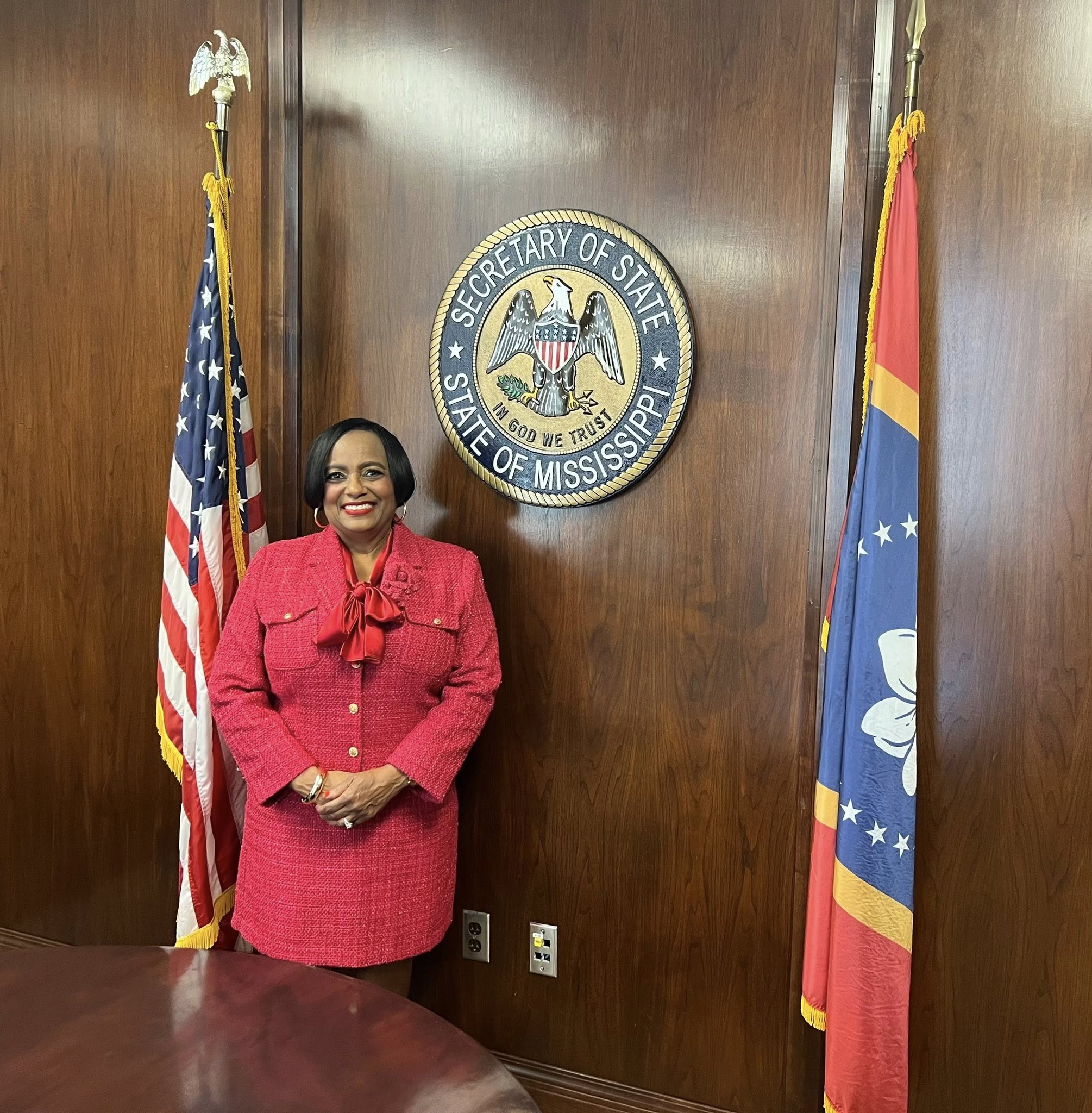
Hinds County Attorney, Bridgett Clayton, has qualified to run for Hinds County Chancery Judge!
“After much prayer and consideration, I am honored and excited to announce that I qualified for Hinds County Chancery Court Judge, District 5-3, on today.”
“I am ready to serve the citizens of Hinds County with God serving as a Lamp unto my feet and the Light unto my path as I seek election for this judicial seat to do justly, love mercy, and walk humbly before my God. Micah 6:8”
I am requesting your prayers and support during the campaign as well as on Election Day which is November 3.
Please be on the lookout for future campaign information. Thank You!
Matthew Thompson is a Chancery practitioner and knows-well the power, authority and responsibility that Chancellor’s have and the knowledge and wisdom they should possess. Attorney Bridgett Clayton has all of those qualities and then-some!
Please support Bridgett Clayton for Hinds County Chancellor!
A new bill in Mississippi will require Joint Physical Custody & EQUAL Parenting TIME, unless the Court finds a compelling reason not too…
Senate Bill 2484 requires that, “There shall be a rebuttable presumption that joint custody and equally shared parenting time is in the best interest of the child. If the court grants joint custody and equally shared parenting time, the court shall construct a parenting time schedule which maximizes the time each parent has with the child and ensures the best interest of the child is met.“
(ii) The presumption created in subparagraph (i) of this paragraph shall be rebuttable by a preponderance of the evidence. A court that does not award joint custody with equally shared parenting time shall document the reasons for deviating from the presumption.
(b) To calculate child support for joint custody with equally shared parenting time, unless the court determines a deviation from this paragraph is in the best interest of the child, the court shall:
(i) Calculate a child-support award under the guidelines of Section 43-19-101 for each parent as if each parent was the obligor;
(ii) Calculate the difference in the two (2) awards by subtracting the lesser award from the larger award; and
(iii) Order the difference in the two (2) awards to be paid by the parent who has the higher adjusted gross income to the parent with the lower adjusted gross income.
(c) Upon petition of both parents, the court may grant legal and/or physical custody to one (1) parent without documenting a reason for deviation.
This is a potential monumental change in child custody law, primarily the requirement for equal parenting time. If signed into law this does away with the every other weekend visitation schedule…
Additionally, it drastically changes the child support landscape and can have “mom” paying “dad” dependent upon the math.
This made its way through the legislature with little fanfare and virtually zero input from practitioners and judges.
Matthew Thompson is child custody attorney and believes children do best with both parents as involved as possible.
In 2023, the Mississippi Legislature enacted changes in child welfare, enacting a Foster Parents’ Bill of Rights. But, what does this mean…? Stay tuned for a multi-part blog diving into the FPBOR and what it means AND what it doesn’t mean…
Foster Parents’ Bill of Rights and Responsibilities
The Department of Child Protection Services shall extend the following rights to persons who provide foster care and relative care:
(a) A clear understanding of their role while providing care and the roles of the birth parent(s) and the placement agency in respect to the child in care;
(b) Respect, consideration, trust and value as a family who is making an important contribution to the agency’s objectives;
(c) Notification of benchmarks that will be required of the foster parent such as appointments, home visits with department personnel, visitations of the child at school and meetings between department personnel and the child’s family;
(d) Advance notice of information regarding scheduled meetings other than meetings where the Department of Child Protection Services personnel or social workers are going to the foster parent’s home for site visits, appointments and court hearings concerning the foster child;
(e) The opportunity to communicate with professionals who work with the foster child including therapists, physicians and teachers who work directly with the child;
(f) The opportunity to communicate and collaborate, without threat of reprisal, with a department representative when further educational services are needed to ensure the child’s educational needs are met, including services such as an Individualized Educational Plan (IEP), tutoring, occupational therapy, speech therapy and after-school programs;
(g) The opportunity to attend all IEP meetings, along with the department worker, at the child’s school as long as the child is in custody and receiving special educational services;
(h) The opportunity to communicate with the foster child’s guardian ad litem;
(i) The opportunity to attend all youth court hearings involving a foster child occurring while that child is placed in their care without being a party to the youth court action, unless the youth court determines that any foster parent should not be present. Foster parents may attend all youth court hearings and have legal counsel attend and observe with them if the child’s permanent plan is adoption by the foster parents, unless the youth court determines that any foster parent should not be present. Foster parents may communicate with the guardian ad litem in writing at any time. Foster parents may ask to be heard concerning the best interest of the child at any disposition or permanency hearing;
(j) When the dates of the permanency hearing and permanency review hearing have been set by the youth court, and if necessary to fulfill the notice requirements, the judge or the judge’s designee shall order the clerk of the youth court to issue a summons to the foster parents to appear personally at the hearings as provided by Section 43-21-501;
(k) The opportunity to request from the youth court permission to communicate with the child’s birth family, previous foster parents of the child, and prospective and finalized adoptive parents of the child, without the threat of reprisal. However, this right creates no obligation of the birth family, previous foster parents, or prospective and finalized adoptive parents to communicate in return;
(l) Involvement in all the agency’s crucial decisions regarding the child as team members who have pertinent information based on their day-to-day knowledge of the child in care and involvement in planning, including, but not limited to, individual service planning meetings, foster care review, individual educational planning meetings, and medical appointments;
(m) The opportunity to participate in the planning of visitations between the child and the child’s siblings, parents or former guardians or other biological family members which have been previously authorized by the youth court. Visitations shall be scheduled at a time and place meeting the needs of the child, the biological family, and the foster family.
Recognizing that visitation with family members is an important right of children in foster care, foster parents shall be flexible and cooperative with regard to family visits but shall retain the right to reasonable advance notice of all scheduled visitations;
(n) The ability to communicate with department personnel or representatives twenty-four (24) hours a day, seven (7) days a week, for the purpose of aiding the foster parent;
(o) A comprehensive list of all resources available to the foster parent and child, including dental providers, medical providers, respite workers in the area, day cares, and methods for submitting reimbursements;
(p) Support from the family protection worker or the family protection specialist in efforts to do a better day-to-day job in caring for the child and in working to achieve the agency’s objectives for the child and the birth family through provision of:
(i) A copy of the “Foster Child Information Form” and all other pertinent information about the child and the birth family, including medical, dental, behavioral health history, psychological information, educational status, cultural and family background, and other issues relevant to the child which are known to the department at the time the child is placed in foster care prior to the child’s placement with a foster parent or parents. The department shall make reasonable efforts to gather and provide all additional current medical, dental, behavioral, educational and psychological information reasonably available from the child’s service providers within fifteen (15) days of placement. When the department learns of such information after fifteen (15) days of placement, the department shall communicate such information to the foster parent as soon as practicable;
(ii) An explanation of the plan for placement of the child in the foster parent’s home and the ongoing and timely communication of any necessary information which is relevant to the care of the child, including any changes in the case plan;
(iii) Help in using appropriate resources to meet the child’s needs, including counseling or other services for victims of commercial sexual exploitation or human trafficking;
(iv) Direct interviews between the family protection worker or specialist and the child, previously discussed and understood by the foster parents;
(v) Information regarding whether the child experienced commercial sexual exploitation or human trafficking;
(vi) Information related to the Healthy, Hunger-Free Kids Act of 2010. Foster parents shall protect the confidentiality of the child by working directly with a designated school official to complete the application for free lunches.
(q) The opportunity to develop confidence in making day-to-day decisions in regard to the child;
(r) The opportunity to learn and grow in their vocation through planned education in caring for the child;
(s) The opportunity to be heard regarding agency practices that they may question;
(t) Information related to all costs eligible for reimbursement, including:
(i) Reimbursement for costs of the child’s care in the form of a board payment based on the age of the child as prescribed in Section 43-15-17 unless the relative is exempt from foster care training and chooses to exercise the exemption; and
(ii) Reimbursement for property damages caused by children in the custody of the Department of Child Protection Services in an amount not to exceed Five Hundred Dollars ($500.00), as evidenced by written documentation.
The Department of Child Protection Services shall not incur liability for any damages as a result of providing this reimbursement.
(12) The Department of Child Protection Services shall require the following responsibilities from participating persons who provide foster care and relative care:
(a) Understanding the department’s function in regard to the foster care and relative care program and related social service programs;
(b) Sharing with the department any information which may contribute to the care of children;
(c) Functioning within the established goals and objectives to improve the general welfare of the child;
(d) Recognizing the problems in home placement that will require professional advice and assistance and that such help should be utilized to its full potential;
(e) Recognizing that the family who cares for the child will be one of the primary resources for preparing a child for any future plans that are made, including return to birth parent(s), termination of parental rights or reinstitutionalization;
(f) Expressing their views of agency practices which relate to the child with the appropriate staff member;
(g) Understanding that all information shared with the persons who provide foster care or relative care about the child and his/her birth parent(s) must be held in the strictest of confidence;
(h) Cooperating with any plan to reunite the child with his birth family and work with the birth family to achieve this goal; and
(i) Attending dispositional review hearings and termination of parental rights hearings conducted by a court of competent jurisdiction, or providing their recommendations to the guardian ad litem in writing.
(13) The department shall develop a grievance procedure for foster parents to raise any complaints or concerns regarding the provisions of Section 43-15-13(11) or (12).
(14) Nothing in this section shall be construed to create a private right of action or claim on the part of any individual, the department, or any child-placing agency.
Matthew Thompson is a child custody attorney in Mississippi and routinely presents at Guardian Ad Litem training and has presented at Foster Parent Training.
For divorced parents, or parents operating under a custody order, summertime is a change in the standard schedule. The summer is full of activities that start and stop at different times. There are camps and visits to grandma’s house. There are trips out-of-town, out-of-state and last-minute opportunities that could be amazing. Be a reasonable parent.
Think about putting the children’s needs ahead of your own. Think about encouraging a good, healthy relationship between the children and the other parent. Think about “what is the right thing to do?,” as opposed to “how can I get the other parent?” By the way, if you do not know what the “right thing” is, you are part of the problem.
Matthew Thompson is a family law attorney in Mississippi and wishes we all could just get along. He also recommends you be a reasonable parent year-round, not just in the summertime.
If you are the parent to a child then act like it.
We have seen the reports and stories of parents going off the deep end. Using illegal drugs, abusing substances, pursuing bad-idea relationships and ultimately putting their own selfish desires above the needs of their children. It’s time to stop.
There are only a handful of people that you, as a parent, are ultimately responsible for; yourself and the people you brought into this world, your children.
Don’t shirk your duties. Don’t neglect your children. Don’t be so consumed with your own desires that you lose sight of what is important. Don’t hate another person so much it clouds your judgment when it comes to your children.
Matthew Thompson is a Child Custody attorney and encourages parents to grow up and act like a parent.
Our Military service personnel deal with serious family law issues which can be made more difficult due to their military service. Being subject to activation, deployment, required training, frequent moves and dangerous activities add to making circumstances more difficult.
However, Mississippi has specific protections for military parents.
MCA 93-5-34, provides an efficient process to resolve custody matters when dealing with a military parent. Upon such circumstances of a custodial parent serving, the statute provides that the other parent will have custody, but that custody ends within 10 days of the former custodial parent returning from service.
Additionally, it provides that the serving parent shall have reasonable access for phone and video visits. The deployed member may also delegate visitation to their own family members. These types of military custody cases receive priority by the Courts to be heard and the serving parent may “attend” via affidavit or electronic means where possible.
Lastly, a parent’s service cannot be used against that parent upon their return for a custody modification by the other parent.
Matthew Thompson is a Military Divorce Attorney in Mississippi.
Follow the blog: BowTieLawyerVisit the website: Thompson Law FirmYou may also contact Matthew with your family law case, question or concern at (601) 850-8000 or Matthew@bowtielawyer.ms
Food, shelter and clothing are necessities and while providing them is the minimum, doing so alone does not make you a great parent.
Do you encourage a relationship between the child and the other parent?
Just NOT badmouthing them does not make you a great parent. You should encourage and promote a good relationship. Oh, and it’s required when parties have joint legal custody.
Do you withhold financial support from your child?
Money isn’t everything, but there is no excuse for not supporting your child.
Do you degrade the other parent to your child?
“I don’t lie to my child!” 1) Yes, you do. Everyday, to protect them. 2) Telling them how big a scoundrel the other parent is hurts the child. Half of their identity is from that scoundrel!
Do you prevent your child from seeing the other parent or interfere with the visitation?
Out of sight is NOT out of mind. Absence can make the heart grow fonder…
Matthew Thompson is a Child Custody Lawyer in Mississippi and reminds you to not be a terrible parent.
Low-income Mississippian’s have a definite need for legal services and lawyers and the Mississippi Volunteer Lawyers Project is working to make sure those Mississippian’s get the help they deserve. MVLP needs your help too.
Q: What is the MVLP?
The Mississippi Volunteer Lawyers Project, or “MVLP,” is a 501(c) (3) non-profit legal aid organization.
Q: What is the Mission of MVLP?
MVLP enables volunteer attorneys to provide equal access to justice for Mississippians of low-income and limited means through high quality pro bono legal assistance.
Q: What types of cases does MVLP handle?
Divorce
Child support contempt, child support modification, and visitation.
Emancipation
Simple wills
Adoption, guardianship, and conservatorships
Name change, birth certificate correction,
MVLP hosts legal clinics throughout Mississippi which are staffed by local volunteer attorneys and law students.
Q: How does MVLP work?
Qualified clients are matched with volunteer attorneys who will represent him/her on behalf of MVLP. MVLP staff periodically review the client’s case to ensure that the match is successful, to assess the progress of the case, and to record pro bono hours contributed by the volunteer attorney.
Q: How is MVLP funded?
MVLP receives funding from the Civil Legal Assistance Fund, the Mississippi Bar Foundation, Legal Services Corporation, special events and seminars, donations from law firms, other business and individuals like you. Over the past several years, MVLP’s funding from the Mississippi Bar Foundation and the Legal Services Corporation, in particular, has been substantially reduced because of the country’s current economic situation. MVLP anticipates additional cuts from both sources in 2015, making this year’s fundraising campaign especially critical.
Q: How will My Donation be used? Annual campaign donations will help MVLP to do the following:
• Recruit more volunteer attorneys to provide much-needed legal services to the poor;
• Increase the number of legal clinics and public awareness workshops offered throughout Mississippi;
• Increase the number of training sessions to volunteers on the types of matters handled by MVLP;
• Provide financial support to clients who cannot afford filing fees and other court costs; and
• Allow the organization to actively engage in short- and long-term, strategic planning with a focus on ways to expand its capacity to reach more individuals in need.
Q: What are the fundraising levels? Benefactor $10000 Sustainer $5000 Partner $2500 Advocate $1000 Patron $500 Friend of MVLP $250
Or any amount.
Q: How can I Donate? A: Donate online through PayPal at www.mvlp.org/donate.
Mail your donation to MVLP at PO Box 1503, Jackson, MS 39215 or
Call MVLP at 601-960-9577 and a MVLP volunteer can pick up your donation.
Matthew Thompson is a Mississippi Family Law Attorney, Board Member for the MVLP, a volunteer attorney for MVLP and has made his donation for the 2014 campaign and challenges you to help as you are able to this worthy cause.
Follow the blog:#BowTieLawyer Visit the website: #Thompson Law Firm You may also contact Matthew with your family law matter or question at (601) 850-8000 or Matthew@bowtielawyer.ms









 (601) 850-8000 - - BowTieLawyer.MS